

Custom website development has become a key requirement for businesses that want flexibility, performance, and long-term growth in 2026. As customer expectations rise and digital competition increases, relying on one-size-fits-all solutions often limits scalability and user experience. Businesses now need websites that are built specifically around their goals, users, and workflows.
This guide explains what custom website development really involves, how it differs from generic solutions, and why it plays a critical role in business success. You’ll learn how custom web development supports responsive web design, improves website performance, and helps create scalable websites that grow with your business. By the end, you’ll have a clear understanding of when custom development makes sense and how to approach it with confidence.
Custom website development refers to building a website from the ground up based on specific business needs, goals, and user behavior. Instead of relying on pre-made layouts or rigid structures, custom development allows businesses to control how their website looks, works, and scales over time.
Unlike generic solutions, custom website development focuses on functionality, performance, and flexibility. Every element is planned with purpose, from layout and navigation to integrations and workflows. This approach confirms that the website supports real business operations rather than forcing the business to adapt to technical limitations.
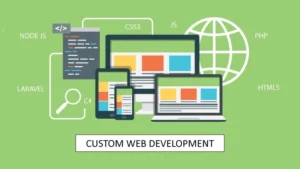
In 2026, businesses operate in a highly competitive digital environment where user expectations are higher than ever. A slow, inflexible, or poorly structured website can directly impact trust, engagement, and conversions.
Custom website development helps businesses:
“Lead generation in 2026 is no longer about traffic alone. Search engines evaluate depth, structure, and credibility. A custom-built platform allows businesses to present expertise in a way that both users and algorithms can interpret clearly.”
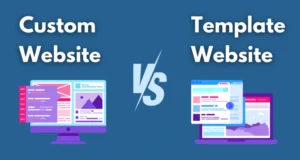
Template-based websites are designed for speed and simplicity, but they often come with limitations. While they may work for early-stage projects, they rarely support long-term business growth.
Custom website development, on the other hand, is built with flexibility in mind. It allows businesses to design unique workflows, implement conversion focused design, and optimize every page for performance and usability. Templates can restrict layout changes, integrations, and advanced features, whereas custom development removes these barriers.
For businesses planning to scale, customize user journeys, or improve engagement, custom solutions offer significantly more control and value.

Understanding the web development process helps businesses make better decisions and avoid confusion. While every project is different, custom website development generally follows a clear structure.
This stage focuses on understanding business goals, target users, and technical requirements. Clear planning means the website is aligned with long-term objectives.
Design is not just about visuals. Business website design at this stage focuses on structure, clarity, and ease of use. Responsive web design makes sure the website performs well on all screen sizes.
Developers build the website based on approved designs, offering clean code, speed, and flexibility. This stage defines how scalable and stable the website will be.
Before launch, performance, usability, and responsiveness are tested. Website performance optimization brings forth fast loading and smooth interactions.

Performance is one of the biggest advantages of custom website development. Unlike pre-built solutions loaded with unnecessary features, custom websites include only what the business actually needs.
This results in:
Strong website performance directly impacts user retention, engagement, and conversions, making custom development a strategic investment rather than a technical choice.
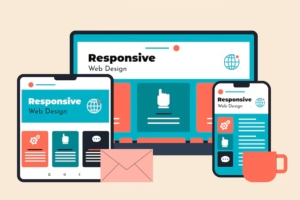
Responsive web design is a core part of modern custom website development. It confirms that websites adapt effortlessly across devices, including mobile, tablet, and desktop.
Custom development allows responsive behavior to be planned from the start instead of being added later. This leads to better layout consistency, smoother interactions, and improved accessibility. Businesses benefit from a single, unified experience that supports users regardless of how they access the website.

Scalable websites are built to evolve. Custom website development makes certain that new features, pages, and integrations can be added without disrupting existing functionality.
This is especially important for businesses planning to:
According to Hans India Digital, in 2026, digital growth is no longer about simply being online. It is about building infrastructure that supports expansion, automation, and long-term scalability. Many businesses launch quickly using ready-made platforms, but as traffic increases and operations become more complex, those early shortcuts begin to create limitations. Performance slows down. Integrations become unstable. Security risks increase. This is where custom website development becomes a strategic growth tool rather than just a technical service. Businesses that invest in tailored digital architecture position themselves for sustained scalability instead of reactive rebuilding.

Even with custom development, mistakes can happen if the process is not handled carefully. Common issues include:
Avoiding these mistakes ensures the website delivers real value and supports sustainable growth.

Choosing custom website development can feel overwhelming without the right guidance. At FlowmazeUX, we help businesses understand what they truly need, what to avoid, and how to plan effectively. Our focus is on clarity, structure, and long-term value rather than trends or complexity.
If you’re unsure whether custom development is the right choice, we offer free consultation to help you evaluate your goals, understand the process, and make informed decisions that support growth and performance.
