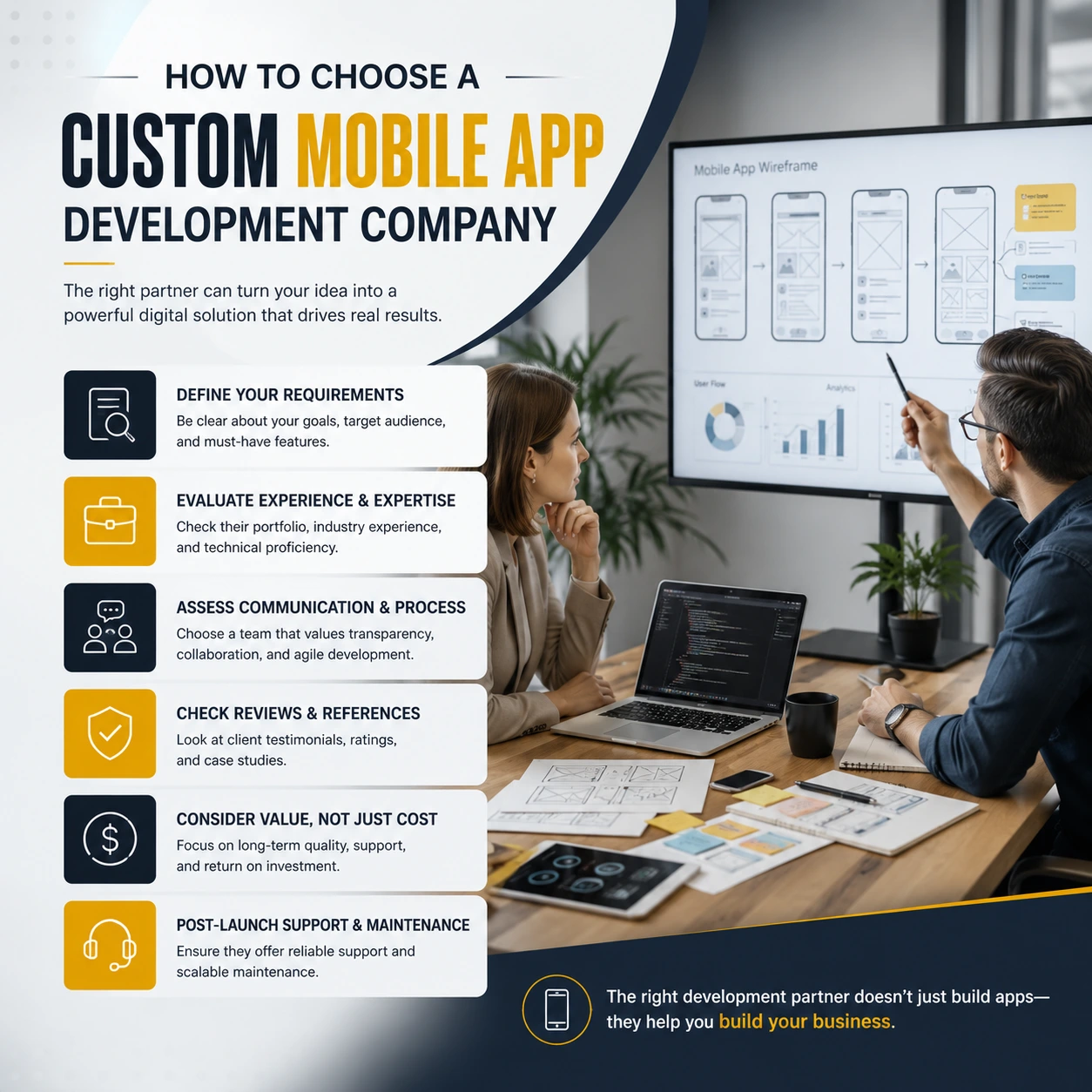
The global app economy is booming, but launching a successful digital product requires more than a brilliant concept. It demands execution. Whether you are a startup founder looking for SaaS product development services or an enterprise leader looking to hire dedicated app developers, your choice of partner will ultimately decide your product’s fate.
Choosing the right custom mobile app development company is a high-stakes decision. Before selecting a partner, it is important to understand the complete process, benefits, and approach behind professional app creation. Learn more in our Custom Mobile App Development Services: Complete Guide. The wrong choice leads to ballooning budgets, missed deadlines, and buggy code; the right choice results in a scalable, high-performance product that drives genuine business revenue.
This comprehensive guide breaks down exactly how to evaluate, vet, and partner with a custom software development vendor to turn your vision into a market-ready reality.
Stage 1: Define Your Internal Project Scope First
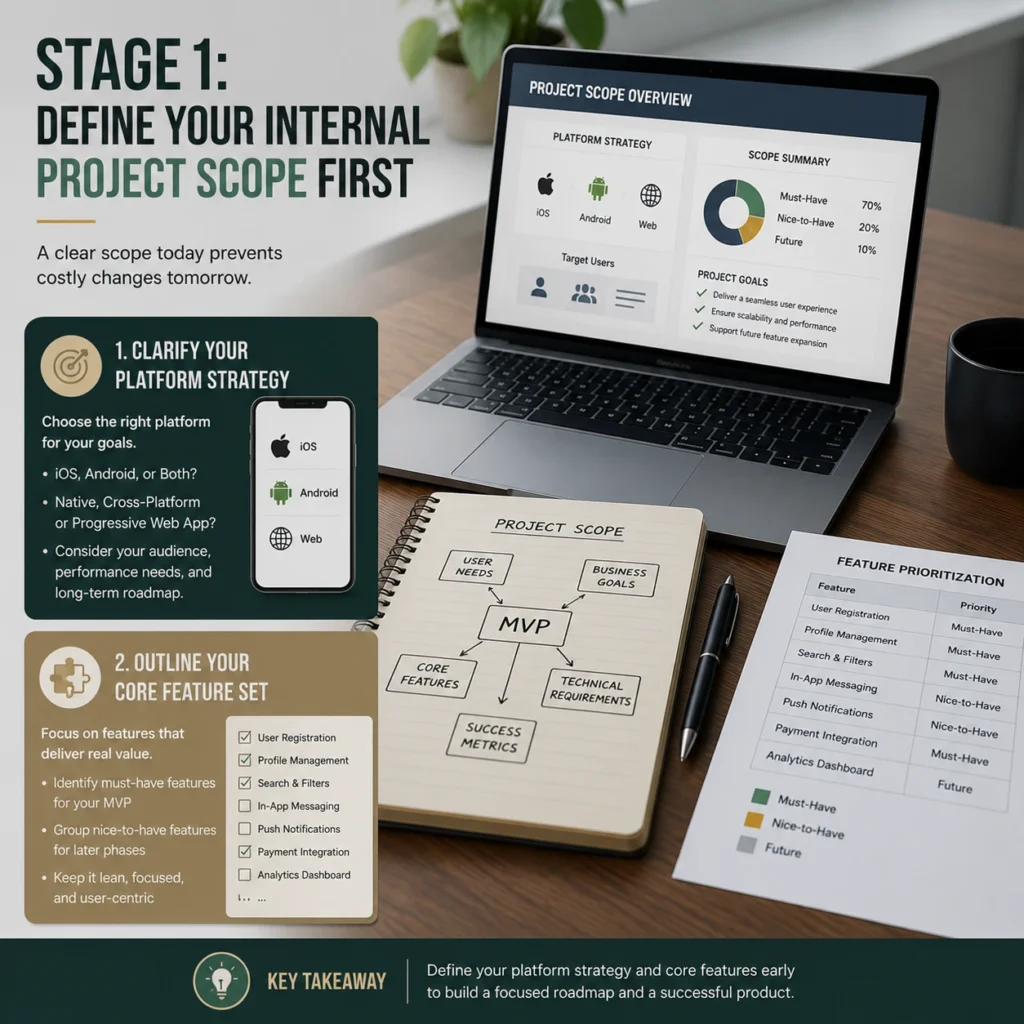
Before you schedule a single discovery call with a custom mobile app development company, you must lay the groundwork internally. If you do not know what you want to build, even the best development partner cannot build it for you.
Clarify Your Platform Strategy
Are you looking for native iOS and Android applications, or will a single code deployment work? If you want to reach both audiences quickly on a tighter budget, look for a cross-platform mobile app development agency specializing in frameworks like Flutter or React Native. If you require deep integration with device hardware (like advanced camera processing or offline Bluetooth sync), native development is your best path.
Outline Your Core Feature Set
Create a high-level feature list. Distinguish between your “must-have” features (for a Minimum Viable Product, or MVP) and your “nice-to-have” features.
- Must-have: User registration, payment gateway integration, real-time messaging.
- Nice-to-have: AI-driven personalization, dark mode, biometric login.
Stage 2: Assess Portfolios and Technical Alignment
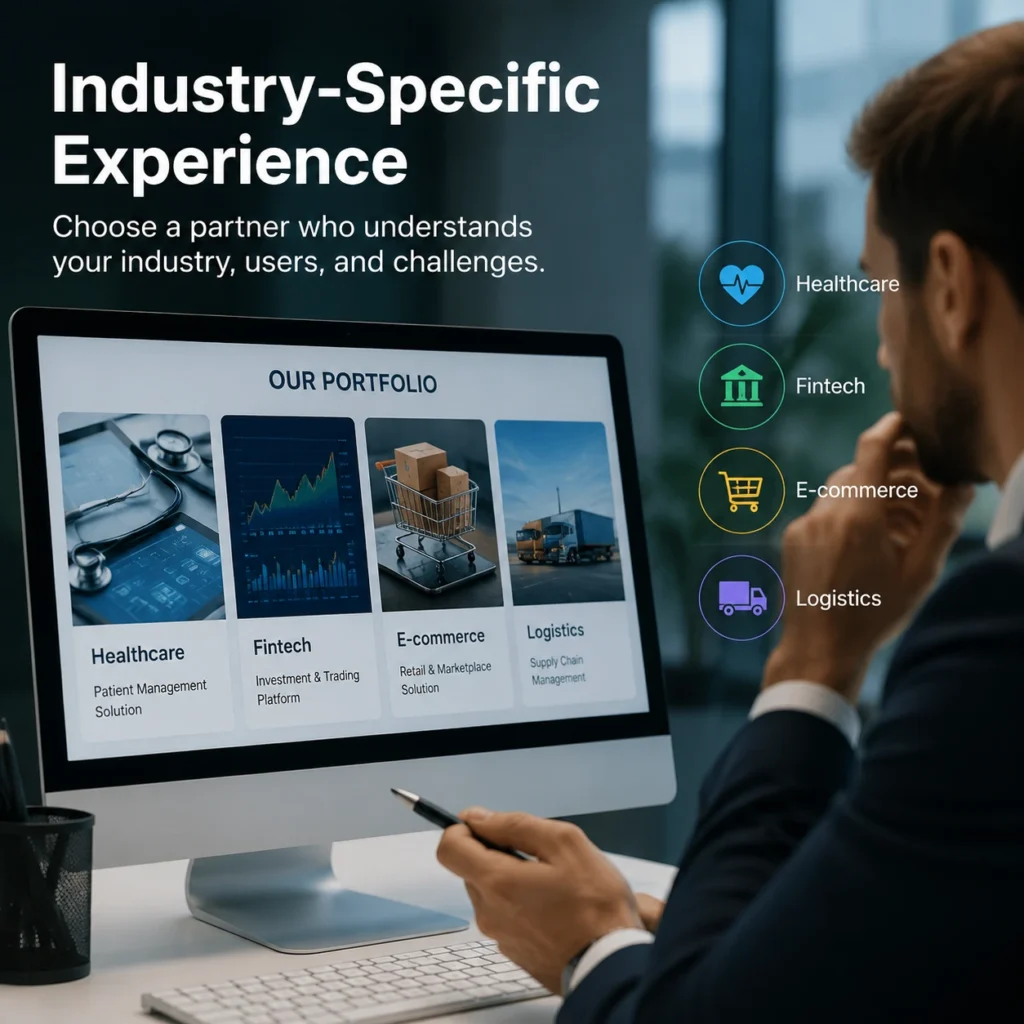
Once your internal scope is ready, begin compiling a list of potential partners. The ultimate tool for vetting a vendor is their app development company portfolio.
| PORTFOLIO VETTING CHECKLIST |
| Have they built apps in our specific industry? |
| Do their past apps have clean, intuitive UI/UX? |
| Are their live apps rated well in the App Store? |
| Have they solved complex integrations (APIs/data)? |
Look for Industry-Specific Experience
While a great development team can learn a new industry, a B2B app development partner who already understands your market’s compliance regulations, user behaviors, and data security standards is invaluable. For instance, if you are in healthcare, you need a team that already knows HIPAA compliance inside and out.
Choosing a partner with proven experience is critical to your app’s survival. According to market data from 8ration, approximately 80% of mobile applications fail within their very first year. The silent killer behind these failures is inadequate app performance, poor user experience (UX), and a lack of early-stage technical scalability, all of which can be prevented by partnering with an experienced development team.
Stage 3: Evaluate Team Expertise and Methodology
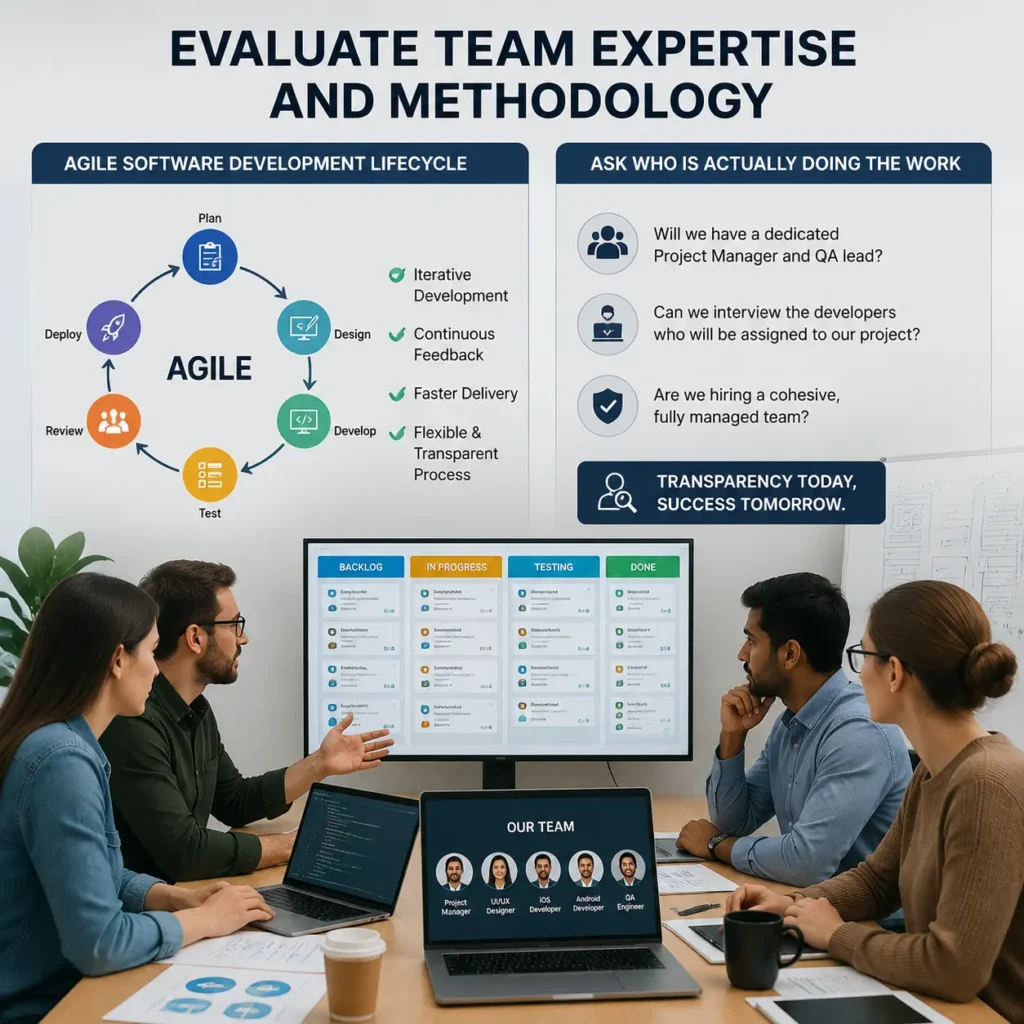
A successful digital product is not built in a vacuum. It requires a highly structured, collaborative workflow.
Look for an Agile Software Development Lifecycle
Avoid agencies that still rely on rigid, outdated “Waterfall” models where you do not see a working product until months into development. Instead, partner with a custom software development vendor that runs an agile software development lifecycle. This means:
- Bi-weekly sprint demos where you can see and test real progress.
- Continuous feedback loops to pivot features based on actual testing.
- More predictable timelines and transparent resource allocation.
Ask Who is Actually Doing the Work
Many agencies pitch you with their senior local team, only to hand the actual coding over to junior, unvetted offshore freelancers. Ask direct questions:
- Will we have a dedicated project manager and QA lead?
- Can we interview the developers who will be assigned to our repository?
- Are we hiring a cohesive, fully managed internal team?
Stage 4: Set Realistic Budgets and Timelines
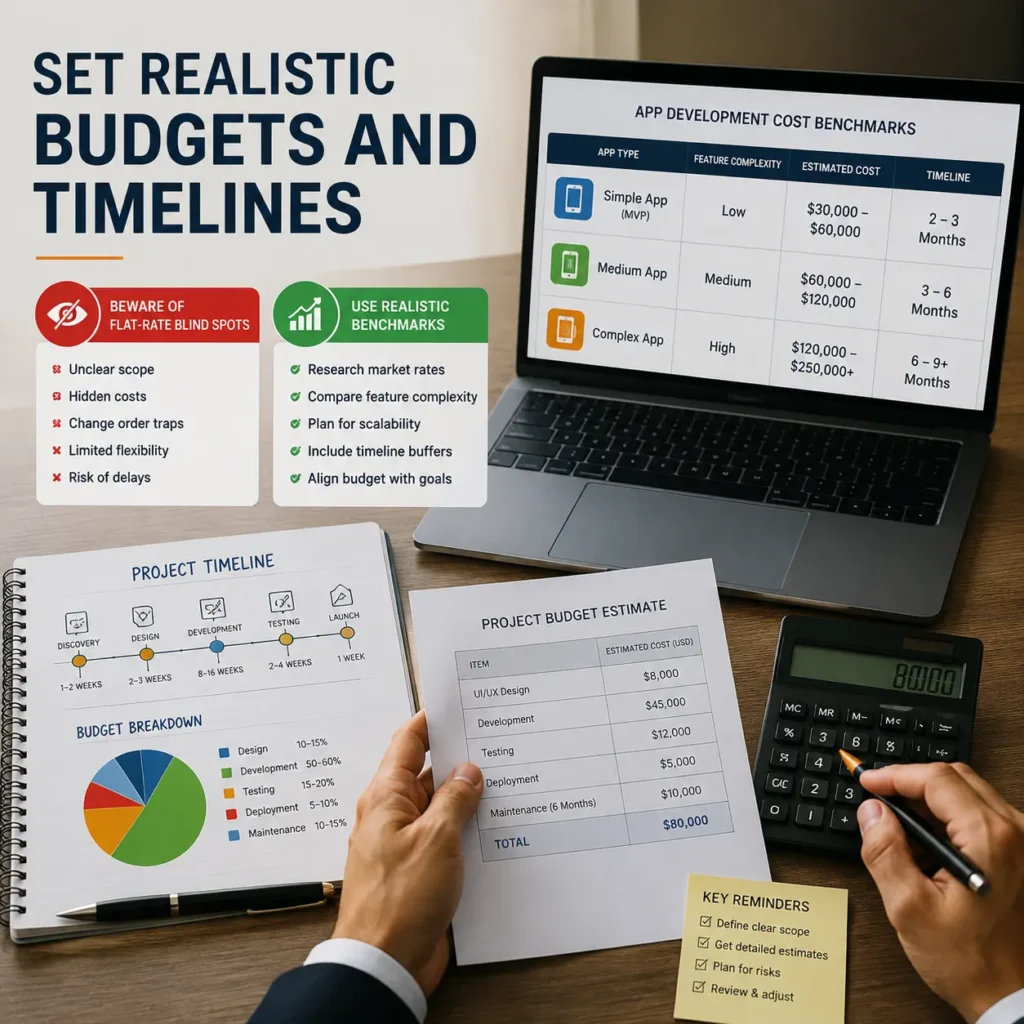
One of the most common friction points in software development is cost. To protect your budget, you must understand how agencies price their work.
Beware of Flat-Rate Blind Spots
While a fixed-price contract sounds safe, it often leads to cutting corners or endless “change orders” if your requirements shift even slightly. For complex, custom builds, a “Time and Materials” model with a dedicated team is often far more efficient and flexible.
Use Realistic Benchmarks
To get a baseline idea of market rates, use a mobile app development cost estimator tool online or ask vendors for a highly detailed line-item breakdown. Remember, you get what you pay for. The final cost depends on several factors, including app complexity, features, platform selection, and technical requirements. Our guide on Custom Mobile App Development Services covers these factors in detail. Cutting costs on your initial build usually results in double the cost later when you have to hire a new team to rewrite broken code.
Stage 5: Plan for Post-Launch and Lifecycle Management
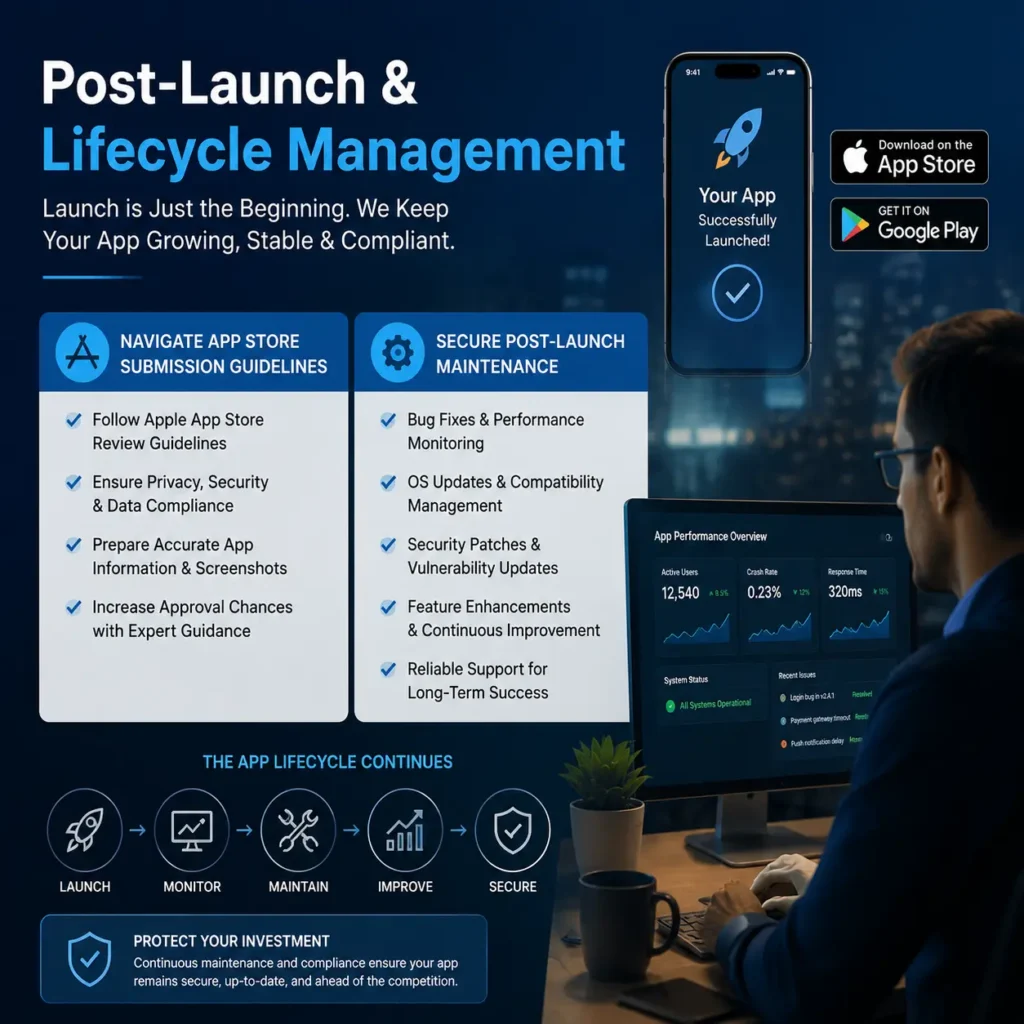
Your relationship with a custom mobile app development company does not end on launch day. In fact, launch day is just the beginning of your product’s life.
Navigate App Store Submission Guidelines
Getting an app approved by Apple and Google is notoriously difficult. Apple’s App Store submission guidelines are incredibly strict regarding user privacy, data tracking, and visual interfaces. Make sure your partner has a proven track record of successfully guiding applications through the review process without major rejections.
Secure Post-Launch Maintenance
Operating systems update constantly, APIs change, and security threats evolve. You must verify that your chosen vendor offers comprehensive post-launch app maintenance services.
Global reliance on outsourced technical support is expanding rapidly. According to global research by Grand View Research and Mordor Intelligence, the custom software development market is projected to reach $126 billion, with application development and post-launch maintenance representing the fastest-growing segments of the IT outsourcing market. This shift highlights how modern businesses now treat their development vendors as long-term product partners rather than one-off contractors.
Without a dedicated maintenance agreement in place, a simple iOS update could easily break your app’s core checkout flow, leaving you without a developer to fix it quickly.
Checklist: Key Questions to Ask Vendors Before Signing
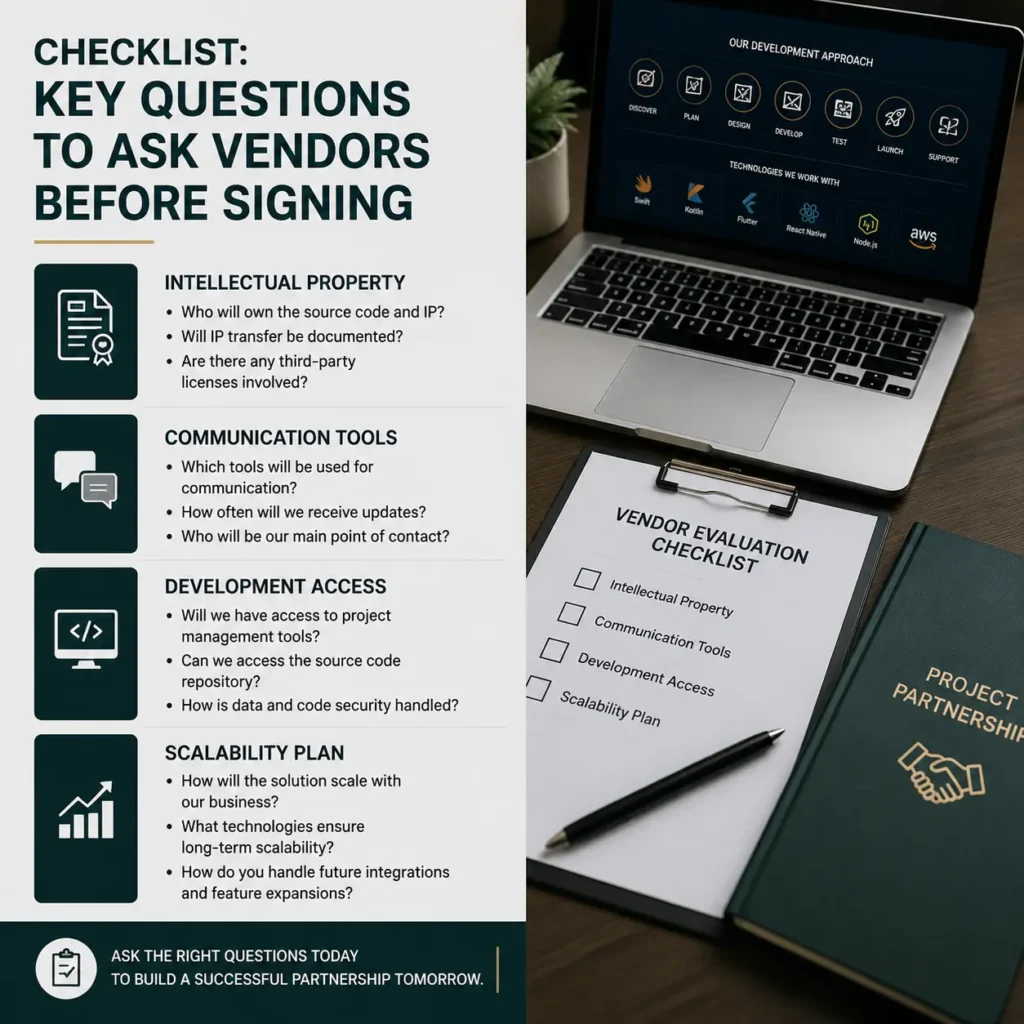
Before you sign on the dotted line with your chosen B2B app development partner, run through this final checklist on your discovery calls:
- Intellectual Property: Do we fully own the source code, design assets, and databases upon project completion? (Ensure this is explicitly written into the contract).
- Communication Tools: What platforms (Slack, Jira, Teams) will we use to collaborate daily?
- Development Access: Will we have real-time access to the GitHub/GitLab repository to monitor code commits?
- Scalability Plan: How will the backend architecture handle a sudden surge from 1,000 to 100,000 active users?
Choosing the right technology partner requires evaluating experience, development processes, technical expertise, and long-term support capabilities. A complete understanding of these factors helps businesses build successful digital products. Read our complete Custom Mobile App Development Services: Complete Guide to explore the entire app development journey.
Why FlowmazeUX is Your Definitive Technical Partner
At FlowmazeUX, we specialize in designing and engineering high-performance, bespoke mobile solutions tailored completely to your unique business goals. Our expert team of product designers, software architects, and agile developers works closely with your brand to turn complex operational challenges into simple, highly intuitive mobile interfaces.
Furthermore, we write clean, secure, and documented code using modern frameworks like Flutter, React Native, Swift, and Kotlin, ensuring your product is built to scale smoothly as your user base grows. So, stop wasting capital on rigid, subscription-based software templates that hold your business back. Let us construct a powerful, proprietary software asset that gives you a permanent competitive advantage.
Frequently Ask Questions
You can easily verify a vendor's work by asking them to walk you through a live, screen-shared demo of their GitHub repositories for those past projects. A legitimate engineering partner will gladly show you their historic commit logs, branching strategies, and codebase structure without compromising confidential client data.
An agile software development lifecycle means you review working, testable software builds every two weeks rather than waiting months for a final, untested delivery. This iterative approach allows you to spot usability issues early, adjust features based on real testing, and keep your overall budget highly controlled.
The safest approach is to confirm your master services agreement explicitly states that one hundred percent of the source code, design assets, and databases transfer to your business upon payment. Avoid vendors who use proprietary, closed-source code libraries that lock you into their hosting systems and make future updates impossible.
You should download their published applications from the app stores directly onto multiple physical devices to test transition speeds, offline capabilities, and design smoothness. Pay close attention to recent user reviews in the app stores to see if past clients frequently complain about crashes or poor performance.
Annual operating system updates from Apple and Google will instantly break older, unmaintained application code and cause your product to crash. Securing a dedicated maintenance agreement follows your software remains fully compatible with new devices, API changes, and modern mobile security standards.
A major red flag is any estimator tool or agency bid that offers a flat-rate price without asking for deep details about your specific API integrations, user database scale, and security compliance needs. Cheap, standardized estimates almost always lead to massive, unexpected change-order fees once real development begins.
A cross-platform agency uses shared code frameworks like Flutter or React Native to deploy a single codebase that runs beautifully on both iOS and Android. This unified development strategy eliminates the need to hire separate, highly specialized native teams, cutting your upfront coding expenses by up to forty percent.
Hiring dedicated, fully managed developers benefits a cohesive team that utilizes standardized coding practices, rigorous peer-review sessions, and dedicated quality assurance checks to build your project. Freelance pools lack unified management, which frequently results in messy, undocumented codebases that are incredibly expensive to fix later.