Table of Content
- Introduction
- Deep Realities of Modern Mobile Product Engineering
- Custom App vs Off-the-Shelf Software
- Native vs Hybrid vs Cross-Platform
- Technologies Used (Flutter, React Native, Swift, Kotlin)
- How Much Does Custom Mobile App Development Cost?
- In-House Team vs Outsourcing
- Development Process: Step-by-Step Guide
- How Long Does It Take to Build a Custom App?
- How to Scale After Launch
- Industry-Specific Use Case
- ROI / Case Studies
- How to Choose a Custom Mobile App Development Company
- Why FlowmazeUX is the Definitive Choice for Your Mobile Product
Introduction
Building a generic digital product in modern corporate ecosystems is a fast way to burn venture capital without securing market share. Investing in custom mobile app development services allows organizations to build proprietary software assets that integrate with internal databases while maintaining complete ownership of their source code. Standard templates limit your functionality and force you to pay ongoing licensing fees that scale directly with your user growth. True digital expansion requires specialized engineering that supports unique operational workflows.
Deep Realities of Modern Mobile Product Engineering
Security and Code Quality Risks
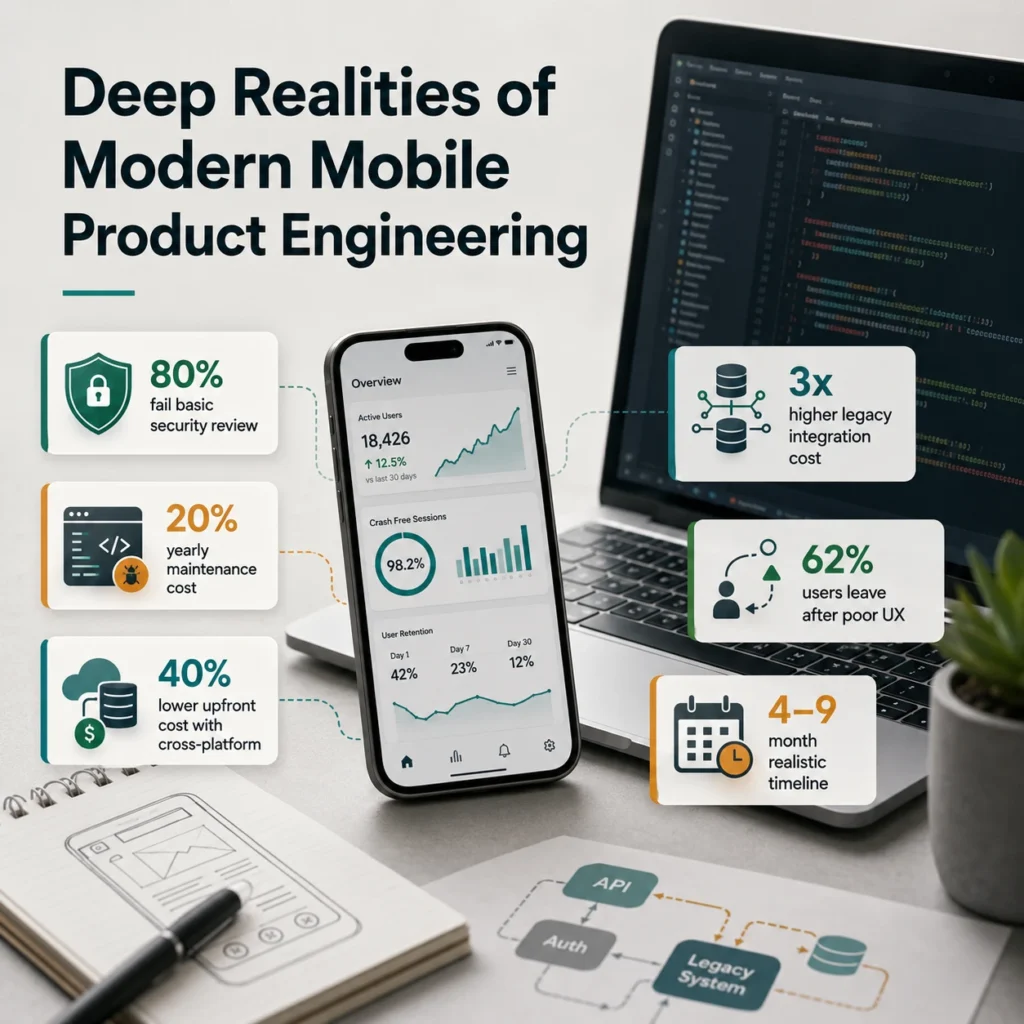
- 80% of template-built applications fail to pass basic App Store security reviews due to reused code structures. Using cheap, generic builders creates a massive security liability that puts user payment profiles at risk from the very first day.
- Offshore agency bids under $10,000 almost always result in completely abandoned code repositories within 6 months. Low-cost development providers rely on outdated libraries that stop functioning the moment Apple or Google pushes a major software update to their mobile operating systems.
Ongoing Maintenance and Development Costs
- Maintaining a custom mobile application costs roughly twenty percent of its initial construction budget every single year. Budgets must account for server hosting fees, continuous security patch deployments, and API license updates to prevent user sessions from crashing unexpectedly.
- Cross-platform frameworks like Flutter or React Native can reduce upfront engineering expenses by up to forty percent. Sharing a single codebase across Android and iOS platforms speeds up your launch timeline while keeping your visual style consistent across different screen sizes.
Custom Apps and Legacy System Integration
- Most enterprises spend three times more money trying to integrate off-the-shelf software with legacy databases than they would have spent building a custom app from scratch. Standard pre-built tools lack the necessary hooks to communicate with proprietary data systems, resulting in expensive custom patch projects.
User Experience and Customer Retention
- Modern mobile users abandon sixty-two percent of newly downloaded products if they encounter a single slow transition or a confusing navigation layout. Investing in high-end UI/UX design is not a cosmetic luxury; it is a vital part of keeping users engaged and preventing sudden drop-offs.
Outsourcing and Internal Team Challenges
- Building an in-house mobile engineering team from scratch takes an average of four months and introduces massive payroll liabilities. Recruiting highly skilled native developers is highly competitive, which makes outsourcing to established agencies a far faster way to get your product to market.
Analytics and Product Improvement
- Ignoring your analytical database during the initial build phase leaves you completely blind to where users are abandoning your product after launch. Integrating deep tracking platforms like Firebase or Mixpanel during early code cycles is vital for planning your future feature updates.
Realistic Development Timelines
- The average timeline required to build and deploy a polished enterprise-grade application sits between four and nine months. Attempting to rush this process inevitably leads to skipped QA runs and buggy software releases that harm your brand reputation.
Features, User Journeys, and Return on Investment
- Real-world return on investment from your software project requires a clean focus on optimizing user journey paths rather than adding useless features. A streamlined app that executes one main task flawlessly will always generate more revenue than a cluttered platform that tries to do everything at once.
Custom App vs Off-the-Shelf Software
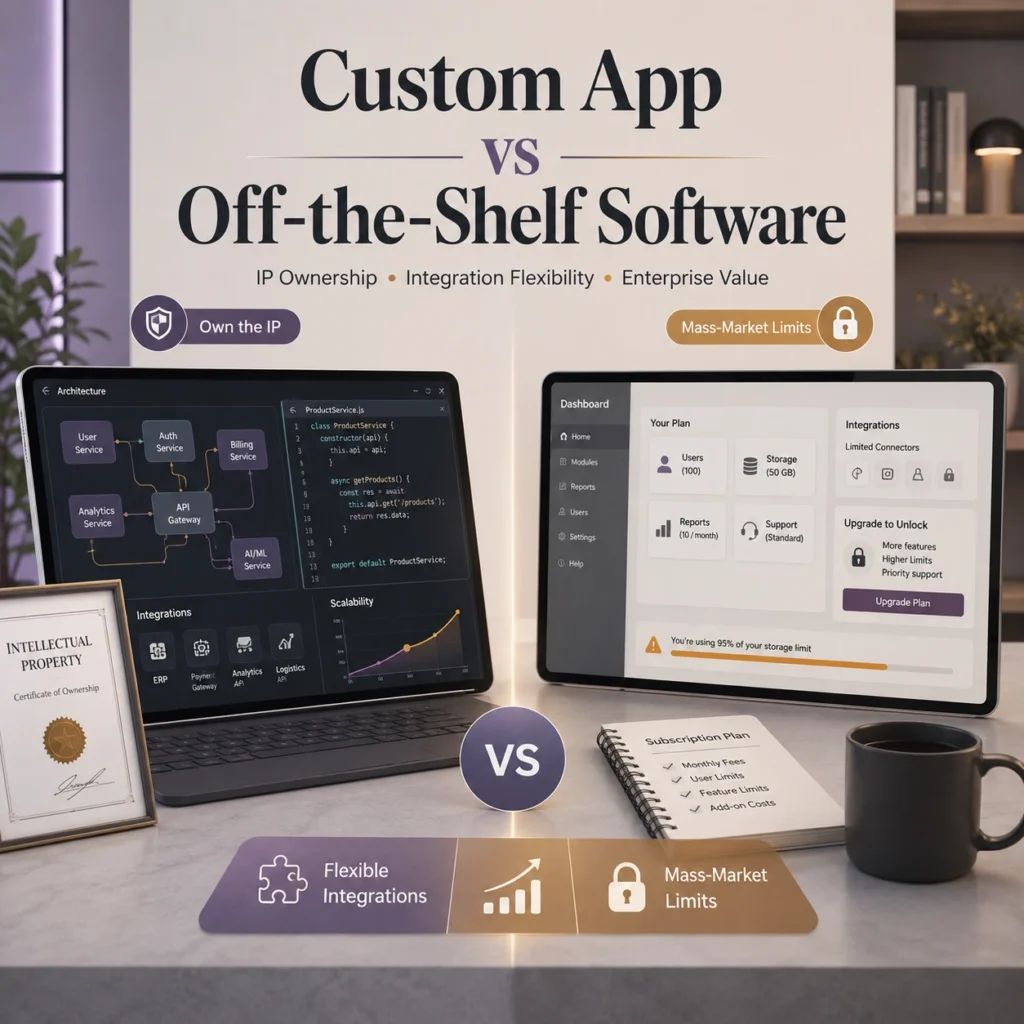
Choosing custom mobile app development services makes sure your organization owns its entire codebase, allowing you to bypass restrictive licensing agreements and scale without platform limitations. Off-the-shelf software packages charge escalating monthly fees per seat, which quickly drain your margins as your customer base expands. Standard pre-built applications force your operational teams to alter their daily workflows to fit the constraints of a generic template. Bespoke digital assets adapt completely to your existing internal processes, helping you secure a distinct operational advantage that competitors cannot buy off the shelf.
To understand the key differences between tailored solutions and ready-made platforms, explore our detailed comparison of Custom App vs Off-the-Shelf Software, including cost, scalability, ownership, and long-term business flexibility.
Why Complete Intellectual Property Ownership Drives Enterprise Value
Owning your software’s source code transforms your development budget from an ongoing operational drain into a highly valuable, sellable business asset. When a company relies entirely on licensed third-party software, its core operations are subject to sudden price hikes, service-term changes, or unexpected service termination. Developing a custom application means you hold complete intellectual property rights, which significantly boosts your company’s valuation during funding rounds or acquisition talks.
Overcoming the Integration Constraints of Mass-Market SaaS
Custom software eliminates the expensive patchwork projects required to make generic off-the-shelf platforms communicate with legacy corporate databases. Mass-market SaaS applications are built with rigid API structures designed for general use, making complex integrations with proprietary ERP systems incredibly frustrating. Bespoke mobile engineering designs the backend data pathways to match your exact legacy systems from day one, preventing data silos and reducing long-term maintenance headaches.
Native vs Hybrid vs Cross-Platform
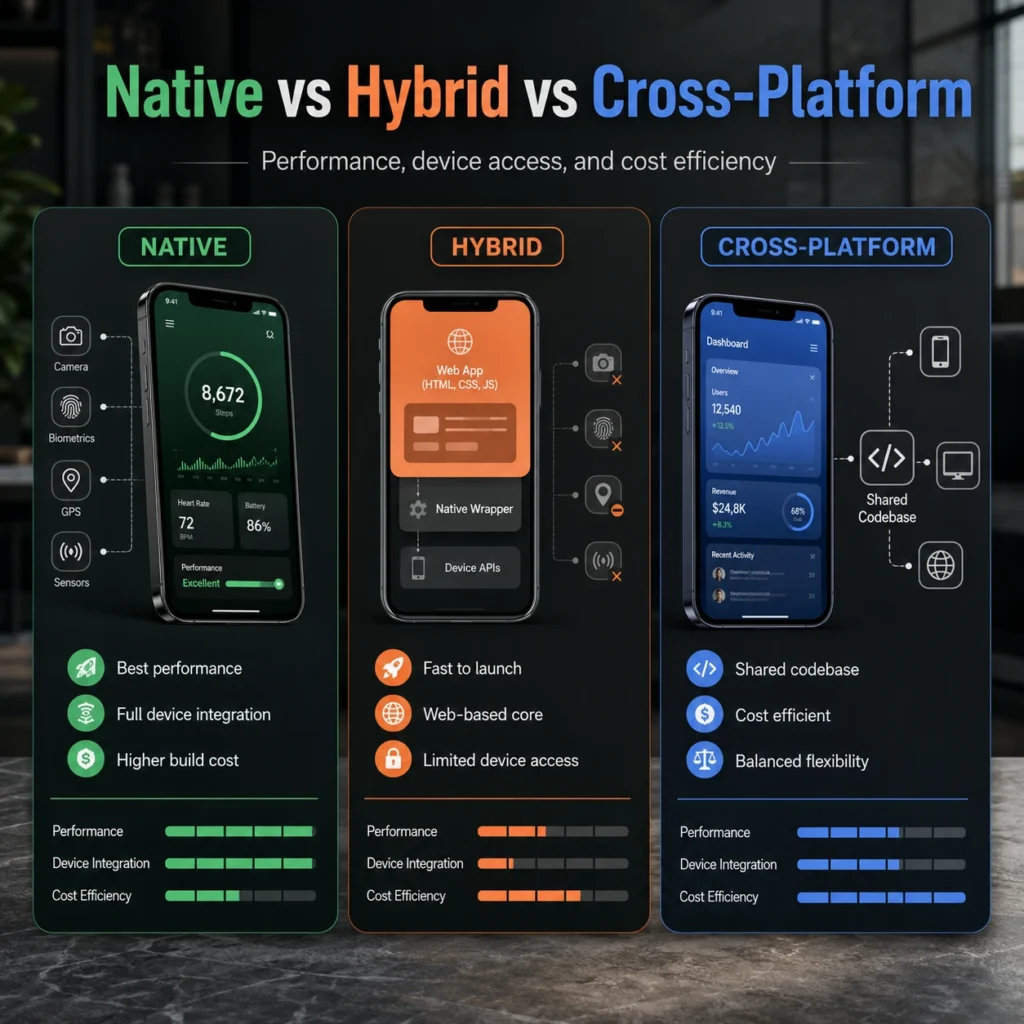
Selecting the correct codebase architecture is the single most important technical choice your brand will make, directly shaping your upfront development costs and long-term maintenance requirements. Native system engineering uses platform-specific languages like Swift or Kotlin to target one operating system, providing the highest possible processing speeds and seamless access to device hardware. Cross-platform frameworks allow engineers to deploy a single codebase to run smoothly on both iOS and Android platforms, cutting your initial launch time in half. Hybrid models wrap basic web tools inside a simple mobile shell, offering the lowest initial price tag at the expense of interface speed. For a deeper comparison of these approaches, explore our Native vs Hybrid vs Cross-Platform: Strategic Mobile Guide.
When to Invest in Native Codebases for Maximum Device Integration
Native development is highly recommended for graphics-intensive platforms, complex processing tools, or applications that rely heavily on background Bluetooth or GPS services. Writing directly in Swift for iOS or Kotlin for Android allows your software to communicate with the physical phone hardware without any delay or translation layer. This native architecture guarantees that your app can utilize the latest operating system updates and biometric security features on the exact day they are released to the public.
Evaluating the Economic Efficiency of Cross-Platform Frameworks
Deploying a cross-platform codebase allows small engineering teams to build, test, and update complex digital applications without having to hire separate, specialized iOS and Android developers. Frameworks like Flutter and React Native allow up to ninety percent of the core application logic to be shared between platforms, cutting your development timeline significantly. This streamlined approach makes it far easier to coordinate your app releases, as new features can be deployed to all your users at the same moment.
Technologies Used (Flutter, React Native, Swift, Kotlin)
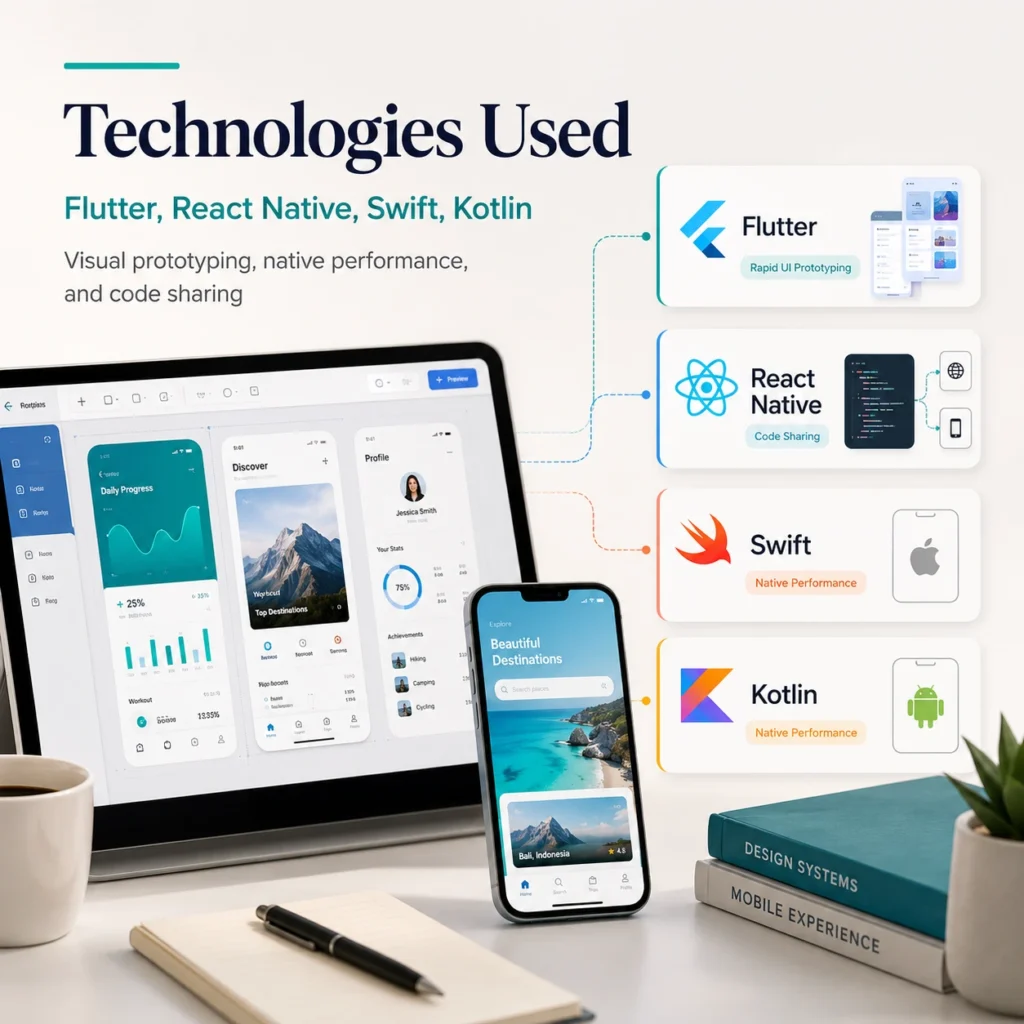
Modern product teams evaluate the specific features of Swift, Kotlin, Flutter, and React Native to select a framework that matches their developers’ skills and long-term feature roadmap. Swift and Kotlin stand as the gold standards for native systems, giving you instant access to the newest features Apple and Google roll out. Flutter utilizes Dart to render beautiful, custom visual elements at high speeds, making it an excellent choice for highly stylized UI designs. React Native utilizes a JavaScript base to allow fast, modular code updates, allowing you to share logic between your web platforms and mobile apps.
To explore more frameworks, programming languages, and emerging solutions shaping modern applications, check out our detailed guide on Top Technologies Used in Mobile App Development.
Why Flutter Has Become the Preferred Choice for High-Speed Visual Prototyping
Flutter enables developers to build highly customized, responsive user interfaces using a single, unified codebase while maintaining native-level rendering speeds. The framework’s direct graphics engine draws every pixel on the screen independently, ensuring your design elements look completely identical on older Android models and the newest iPhones. This level of visual consistency makes Flutter exceptionally popular for brands that want to deliver a premium, designer-led mobile experience without doubling their development costs.
Leveraging React Native to Maximize Web and Mobile Code Sharing
React Native allows engineering teams to use their existing JavaScript or TypeScript skills for mobile app development. The framework connects familiar web concepts with native mobile components. Developers can reuse business logic, libraries, and design patterns from existing web platforms. This reduces the learning curve for internal teams. It also helps companies scale development without hiring highly specialized native app engineers.
How Much Does Custom Mobile App Development Cost?
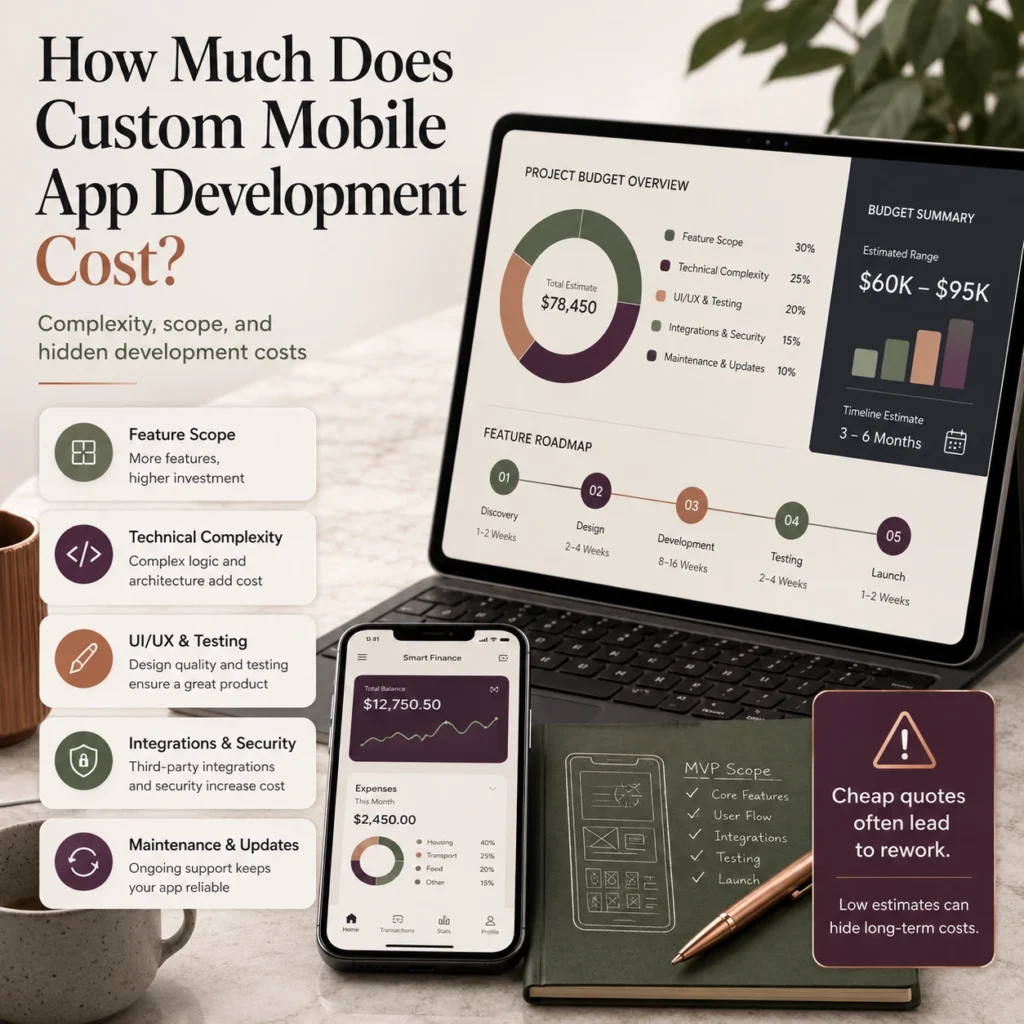
The cost of custom mobile app development services generally ranges from $40,000 to over $300,000, depending on your app’s technical complexity, platform choices, and API integration needs. To understand the complete pricing factors, estimates, and budget considerations, explore our detailed guide on How Much Does Custom Mobile App Development Cost?. Minor utility apps sit on the lower end of this pricing spectrum, while high-security transactional platforms command enterprise budgets. Throwing capital at an undefined feature list is a fast way to bleed cash. Smart executives baseline their financial requirements by scoping a lean minimum viable product first, keeping initial launch costs highly controlled.
Why Technical Complexity and Feature Scope Dictate Your Real Software Expenses
Your overall software expenses scale based on the volume of custom data pipelines, offline syncing needs, and real-time calculation engines you choose to build. Simple apps with static informational layouts require minimal server power, keeping development costs predictable. When you introduce complex features like real-time GPS tracking, multi-party video streaming, or deep AI-driven recommendation layers, the engineering hours multiply rapidly. Every custom integration requires dedicated back-end construction, testing cycles, and ongoing API support.
The Hidden Financial Danger of Cheap Initial Code Estimates
Amateur development shops lure non-technical founders in with low-ball estimates that inevitably lead to broken software repositories, missed deadlines, and costly rescue projects. These predatory agencies cut corners by utilizing bloated templates, copy-pasting insecure code blocks, and skipping thorough device testing entirely. Once your app starts crashing on actual user phones, the cost to audit and patch the broken codebase frequently exceeds the price of building it correctly from day one. Investing in mature engineering partners from the start shields your brand from these financial traps.
In-House Team vs Outsourcing
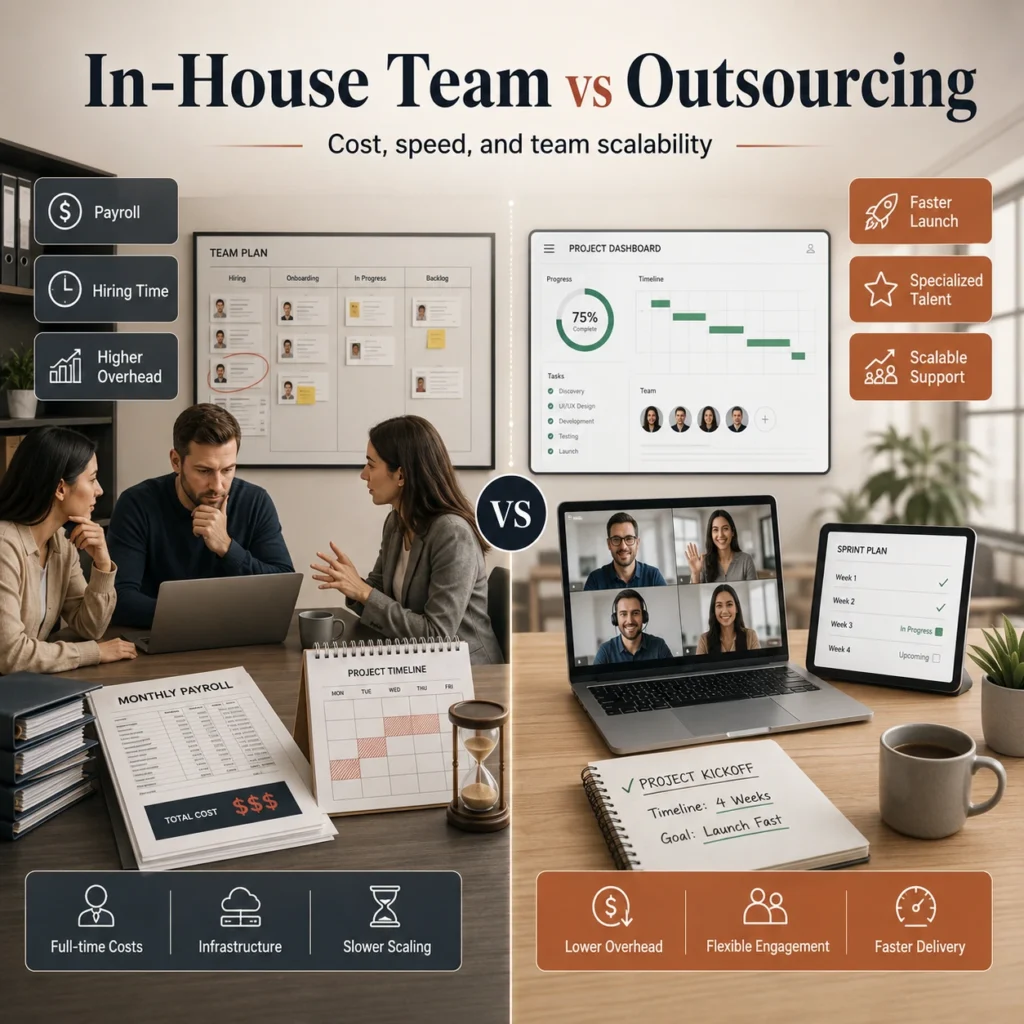
Choosing between an in-house team and outsourcing comes down to whether digital product engineering is your core business competency or a supporting operational tool. Tech-first startups where the mobile interface is the entire business model often benefit from maintaining a dedicated internal staff. Established companies looking to deploy high-value utility tools quickly find that partnering with external agencies is a far faster approach. Making the wrong structural decision here can saddle your business with permanent payroll liabilities or leave you with unmaintainable code.
Before selecting the right development approach, explore the key differences between these two models in our detailed guide on In-House Team vs Outsourcing, including cost considerations, scalability, expertise, and long-term business impact.
The Financial Weight of Maintaining a Full-Time Internal Development Squad
Hiring a full-time in-house engineering team demands high monthly overhead, recruitment friction, and expensive payroll commitments that drain company cash flow. Finding, vetting, and onboarding senior mobile engineers, QA specialists, and product managers takes months of intense recruiting focus. If your product needs to pivot or goes into a slow maintenance phase, you are still stuck paying top-tier tech salaries for idle hands. This rigid staffing structure severely limits your business agility during shifting economic conditions.
Why Strategic Outsourcing Accelerates Time-to-Market for Fast-Moving Brands
Outsourcing your mobile build to an established development agency bypasses the hiring lag and gives you instant access to seasoned professionals from day one. Experienced agencies bring battle-tested workflows, ready-to-use development stacks, and fully formed team dynamics directly to your project. This plug-and-play engineering model allows your brand to transition from raw concept to a live app store listing in a fraction of the time. Once your primary app build is complete, you can easily scale your outsourced team down to basic maintenance levels.
Development Process: Step-by-Step Guide
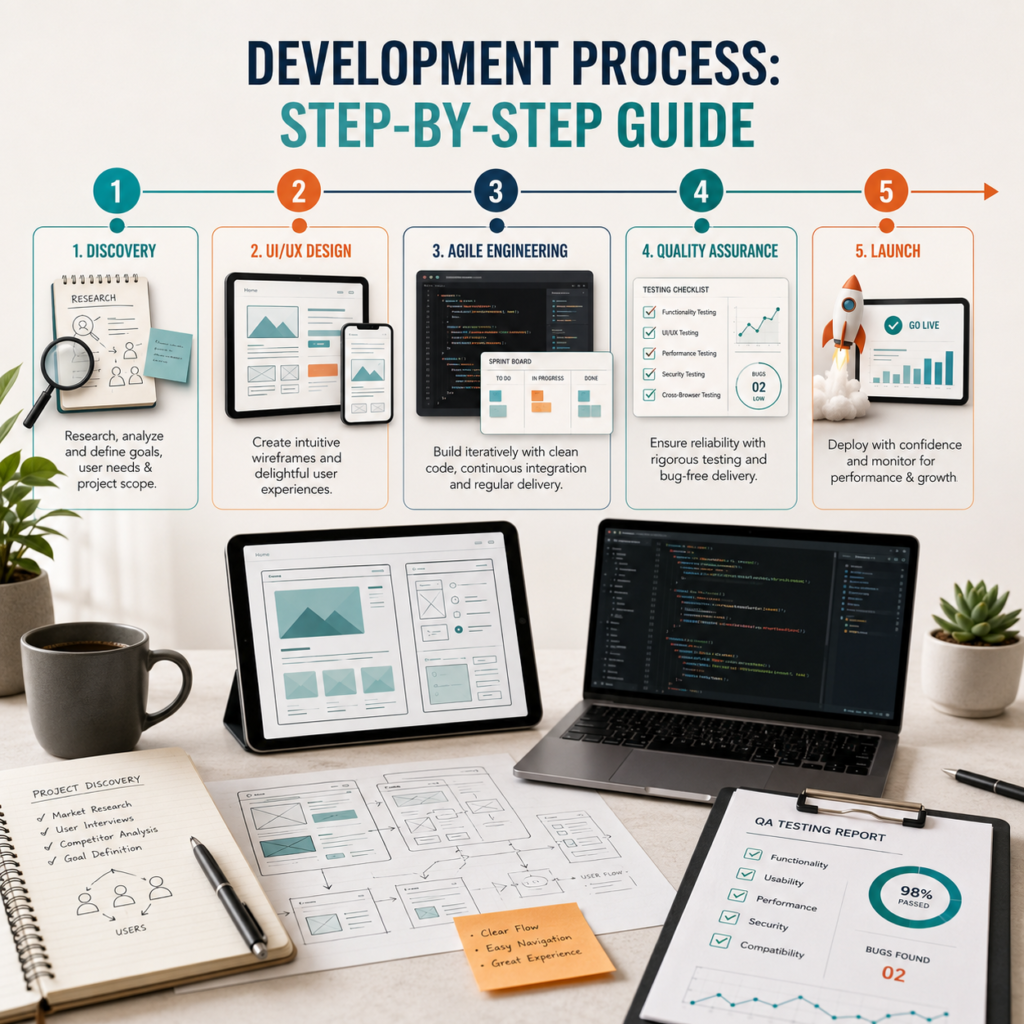
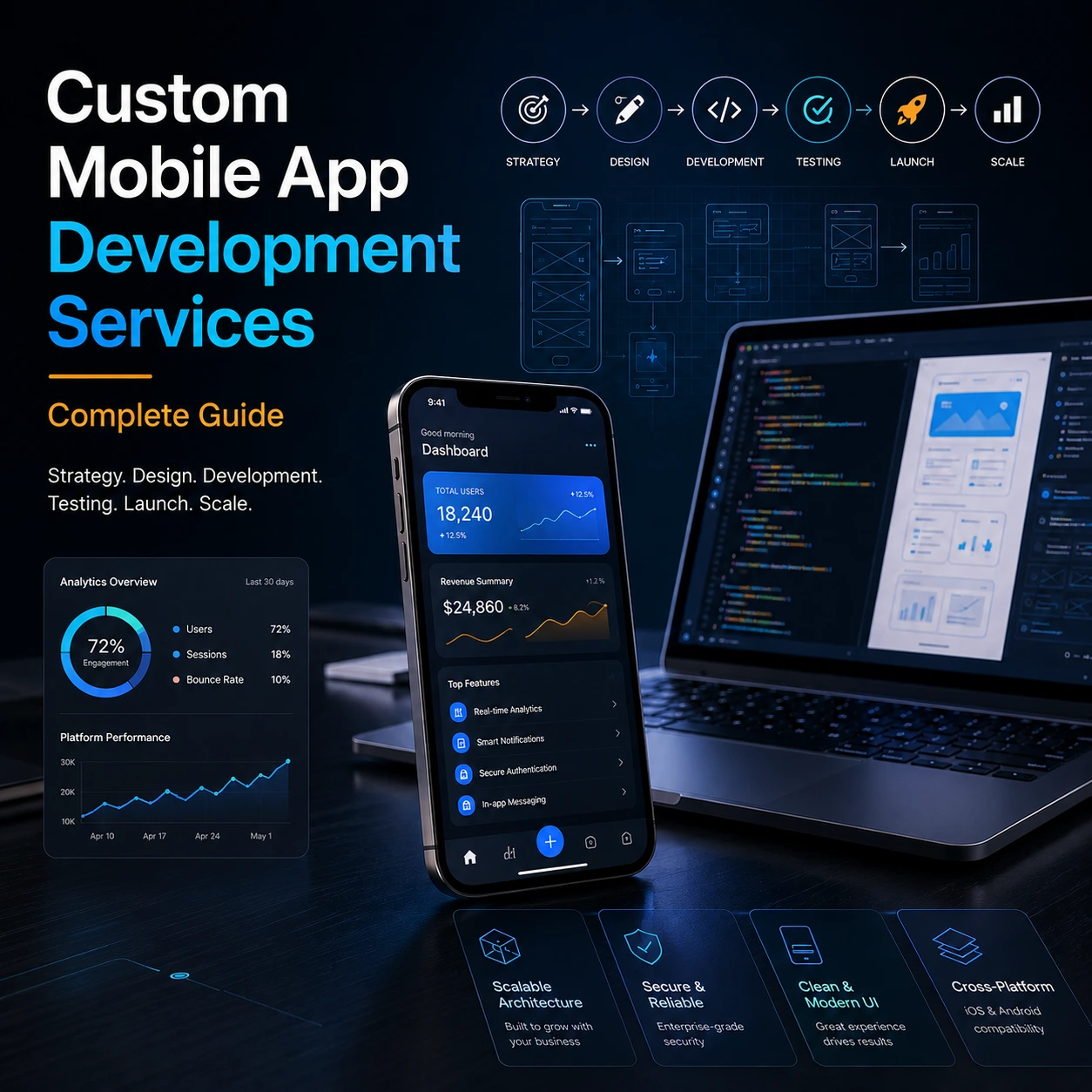
The custom mobile app development process is a structured, five-stage lifecycle that transforms a raw product concept into a secure, market-ready application. Rushing straight into writing code without a clear blueprint is a recipe for project failure and bloated budgets. Highly successful development cycles treat design, development, and testing as interconnected loops that continuously refine the product. Following a disciplined, milestone-driven framework is the only way to deploy a stable digital asset on time and within budget.
To understand each stage in detail, including planning, design, development, testing, and deployment, explore our complete guide on Mobile App Development Process: Step-by-Step Guide
The Critical Discovery and UI/UX Design Phase
The discovery and design phase maps out your user journeys, wireframes, and clickable prototypes to validate your app concepts before writing a single line of code. Designers collaborate with technical architects to map out how data flows between different screens and back-end databases. Creating high-fidelity interactive models allows stakeholder teams to spot usability bottlenecks early, when they are still cheap to fix. This foundational phase produces the definitive blueprint that guides the entire coding phase.
Agile Engineering and Strict Quality Assurance Protocols
Agile engineering divides code creation into bi-weekly sprints, while continuous quality assurance tests the software for bugs on physical mobile devices. Developers construct the front-end components and integrate secure cloud databases incrementally, allowing you to review functional builds every two weeks. Simultaneously, QA specialists run extensive security tests, performance audits, and compatibility checks across multiple screen shapes and operating systems. This dual approach ensures your final application is secure, fast, and entirely free of critical bugs before it reaches your users.
How Long Does It Take to Build a Custom App?
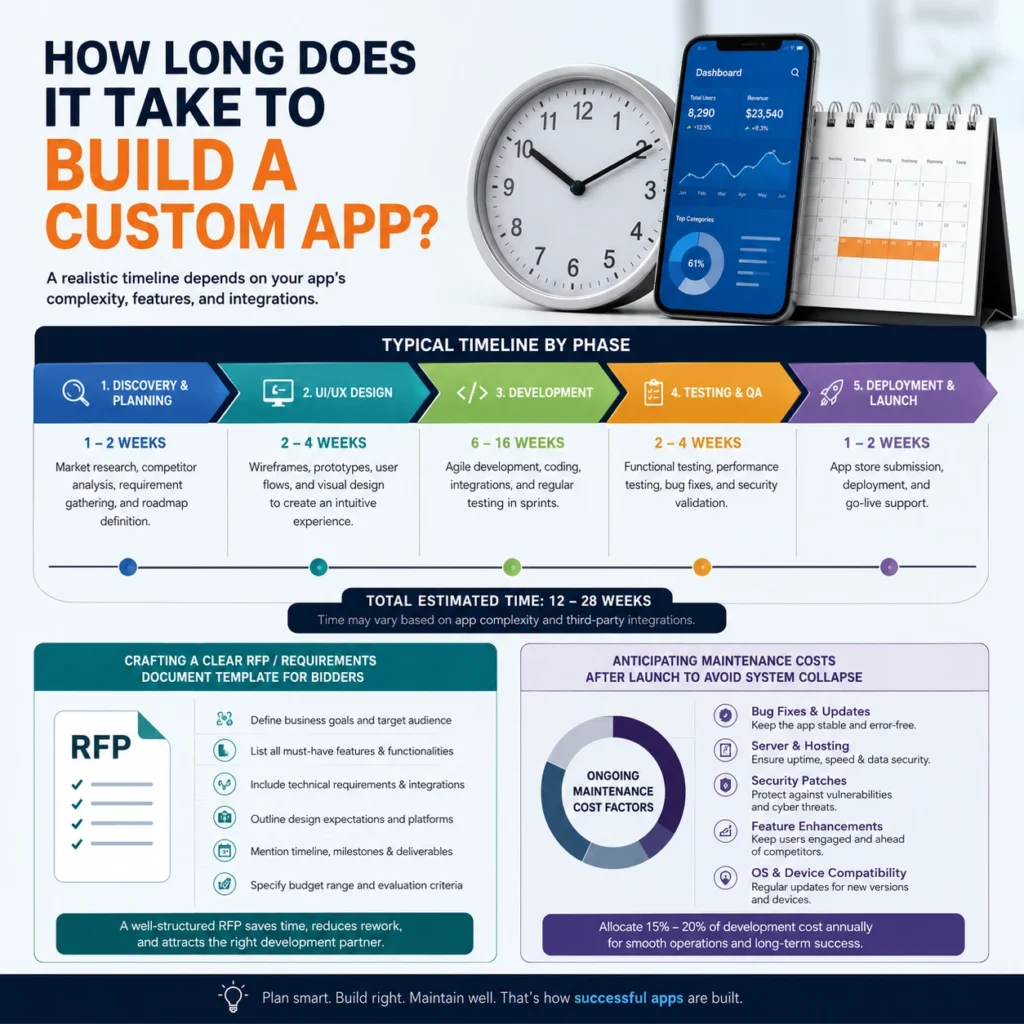
Building a custom mobile application from scratch typically takes between three and nine months, depending on the overall complexity of your feature list and system integrations. Rushing a software build to hit an unrealistic launch date guarantees a buggy product that frustrates your initial user base. The timeline spans several distinct phases, including strategic discovery, UI/UX design, database configuration, core coding, and exhaustive quality checks.
While a basic MVP can sometimes sneak past the finish line in twelve weeks, full-scale enterprise products requiring custom machine learning models or legacy ERP syncs frequently require up to a year of dedicated engineering focus.
A common trap is assuming that throwing double the developers at a late project will magically speed up the launch. In reality, adding bodies to a highly complex software build increases communication overhead and often slows down the entire release pipeline.
Maintaining a steady, structured development pace is the only way to build clean, documented code that survives future operating system updates. Pacing your software development cycles realistically keeps your team focused on shipping highly polished features rather than constantly patching sloppy work under stress.
Crafting a Clear RFP / Requirements Document Template for Bidders
A highly detailed Request for Proposal (RFP) prevents development agencies from submitting wildly inaccurate cost estimates and keeps your bidding process highly competitive. Vague RFP documents lead directly to padded budget proposals from agencies hedging their bets against unexpected scope creep. Your requirements document should clearly detail your target user base, exact feature lists, preferred tech stack, database integrations, and specific compliance needs like HIPAA or PCI-DSS. Providing user story flowcharts and clear business goals helps agencies estimate their design and engineering hours with high accuracy.
Include your expected timeline and budget limits in the RFP. This helps remove unqualified providers at the start of your search. Clear requirements also encourage agencies to propose realistic development plans. For example, they may recommend a lean cross-platform MVP instead of a costly dual-native build.
A tight, structured requirements document establishes a solid benchmark for holding your selected engineering partner accountable throughout the entire coding cycle. It turns your expectations into clear, contract-backed deliverables that protect your capital from start to finish.
Anticipating Maintenance Costs After Launch to Avoid System Collapse
Post-launch maintenance often costs 15% to 25% of the initial development budget each year. This investment keeps your application secure, stable, and functional. Treating launch day as the end of development is a serious business mistake. Without regular updates, app performance can decline quickly. iOS and Android also release major updates every year. These changes may break older code and require immediate compatibility fixes. Beyond OS updates, your monthly hosting, database auto-scaling, security scans, and third-party API license fees require continuous financial support.
Failing to set aside a maintenance budget can cause critical bugs to build up over time. These issues may frustrate users and push them toward competitors. Unresolved security flaws can also put your app at risk of removal from app stores. That could damage your reputation and reduce the value of your original investment.
Smart teams treat software as a living, breathing asset that needs continuous technical updates, keeping a dedicated support team on hand to optimize performance and address user feedback instantly. Investing in continuous maintenance protects your user retention rates and shields your brand from technical debt.
How to Scale After Launch
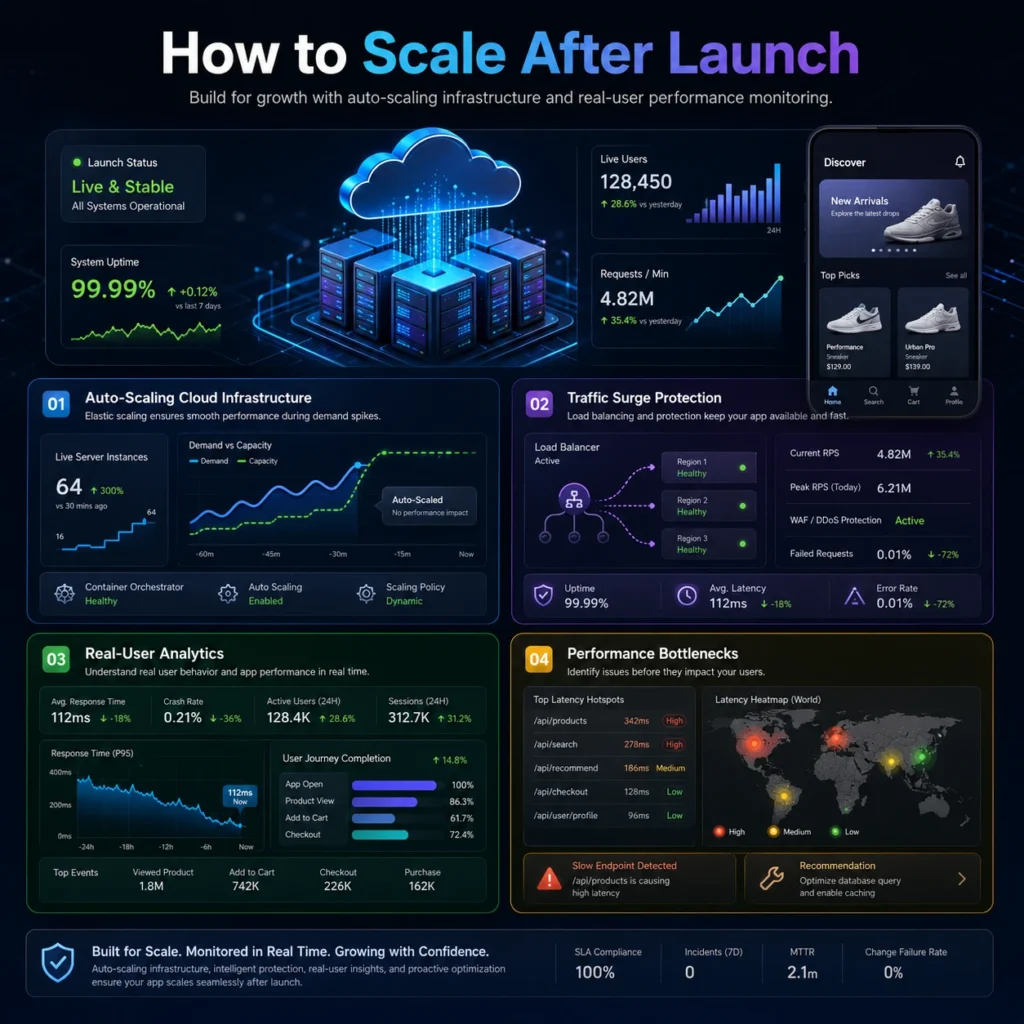
Scaling your app after launch means making sure your software can handle thousands of new users at the same time without slowing down, crashing, or breaking. Many businesses make the mistake of celebrating a successful launch day without preparing their backend systems for sudden traffic spikes. When your app goes viral or gets a sudden influx of users, your servers can easily become overloaded if they are not built to scale automatically. Preparing your infrastructure early keeps your app fast, reliable, and online when your customer base starts to grow.
Utilizing Auto-Scaling Cloud Infrastructure to Prevent Server Crashes
Modern cloud platforms such as AWS and Google Cloud can adjust server capacity automatically. They scale up during traffic spikes and scale down when demand drops. This setup helps control hosting costs because you only pay for the resources you use. A fixed, low-cost server cannot handle sudden increases in traffic. Your app may crash when too many users log in at the same time. Auto-scaling shields your digital product from unexpected downtime and keeps your user experience perfectly smooth.
Monitoring Real-User Analytics to Identify Performance Bottlenecks
Tracking actual user behavior with analytics tools like Firebase or Mixpanel shows you exactly where your app is slowing down or where users are getting stuck. These platforms measure crucial metrics like page load speeds, crash rates, and user drop-off points in your sign-up screens. If a specific screen takes more than three seconds to load, your users will simply close the app and delete it. Regularly monitoring this data allows your team to fix real performance bottlenecks before they hurt your overall user retention rates.
Industry-Specific Use Case
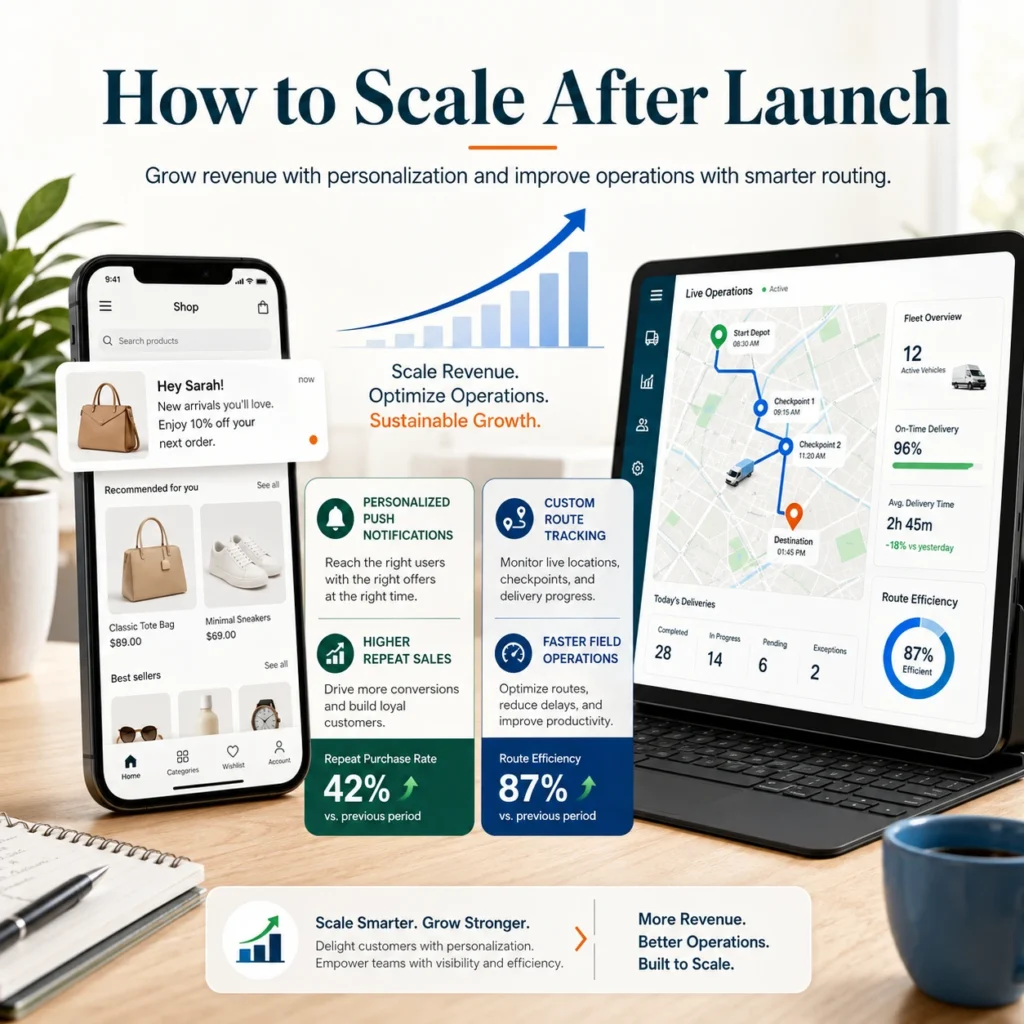
Applying custom mobile app development services to your specific industry allows you to solve precise operational problems that generic, pre-made software completely ignores. Every sector has its own unique rules, compliance standards, and daily workflows that require tailored digital solutions. A hospital group needs secure, healthcare-compliant data handling, while a logistics company requires real-time route tracking. Custom apps are engineered to fit these exact industry demands perfectly, helping you run your business far more efficiently.
How E-Commerce Apps Drive High Sales with Personalized Push Notifications
Custom retail apps use shopping history to send personalized discount offers directly to each user’s phone. Unlike generic email newsletters, push notifications are more visible and can encourage faster customer responses. If a shopper leaves an item in their cart, the app can send a timed reminder. It can also include a small discount to encourage checkout and help complete the sale. This personalized touch turns casual app browsers into active, loyal, paying customers.
Streamlining Field Operations in Logistics with Custom Route Tracking
Custom logistics apps connect directly to a delivery driver’s phone GPS. They calculate fast, fuel-efficient routes in real time. These tools also connect instantly with centralized office databases. They automatically update order statuses and capture digital customer signatures on the spot. This eliminates slow, paper-based tracking methods and significantly reduces delivery delays. It keeps your entire supply chain fully synchronized, lowering your daily fuel costs and improving customer satisfaction.
ROI / Case Studies
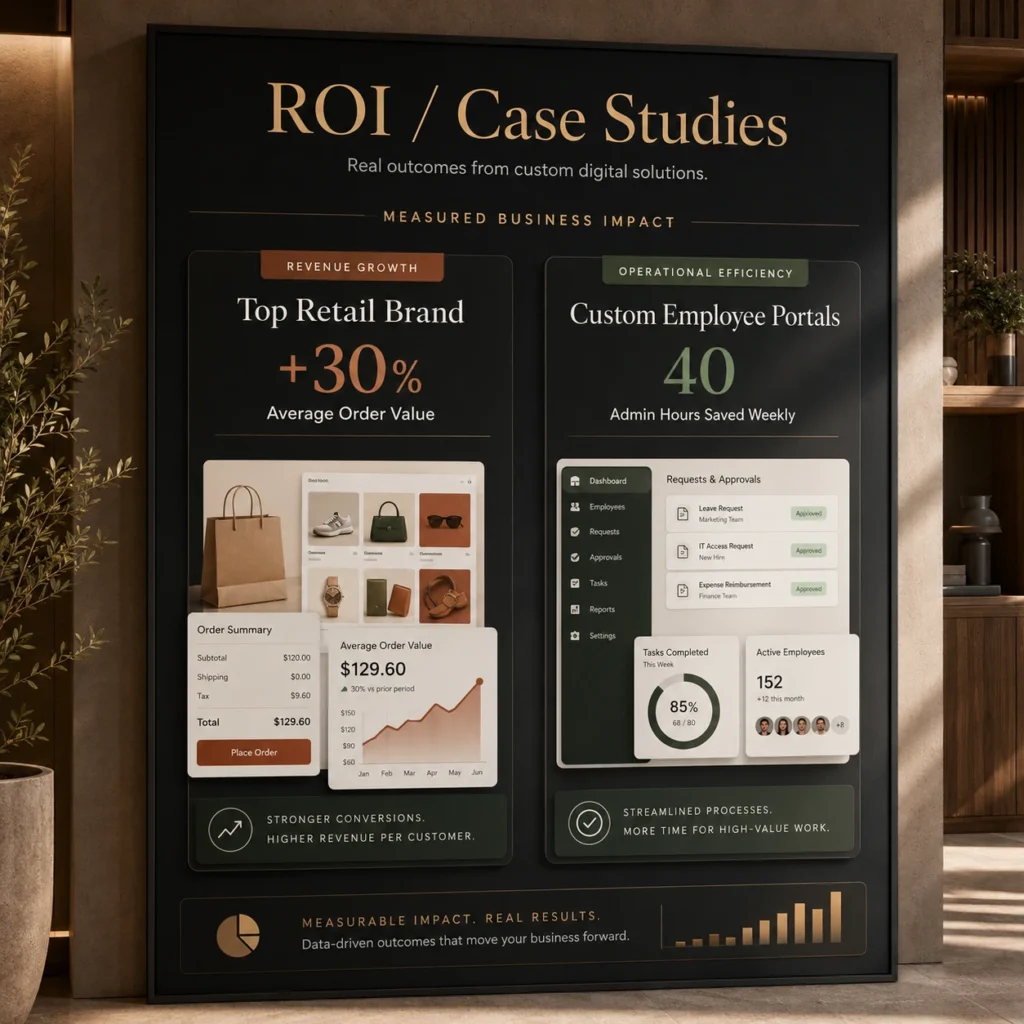
Measuring the return on investment (ROI) of your custom mobile app requires looking at concrete business metrics like increased sales, reduced admin hours, or higher customer lifetime value. Building a custom app is a significant financial commitment, which is why tracking its real-world performance is so critical. Successful apps do not just look pretty; they actively solve expensive business problems and unlock brand new revenue streams. Reviewing clear performance data proves that custom software is a powerful business growth tool rather than just a cost. For a deeper look at ROI formulas, financial metrics, and real-world enterprise examples, explore our Mobile App ROI: Real Case Studies, Metrics & Value Calculation.
How a Top Retail Brand Boosted Average Order Value by Thirty Percent
A leading fashion retailer retired their slow, responsive mobile website and replaced it with a highly polished, custom-built shopping application. The custom app allowed users to complete checkout in only two clicks. It securely saved their payment details and featured an interactive product catalog. The fast and enjoyable shopping experience kept users engaged for longer. It also encouraged them to add more items to their carts. Within six months of launch, the brand’s average order value jumped by thirty percent, fully recovering its initial development costs.
Saving Forty Admin Hours Weekly Through Custom Employee Portals
A mid-sized service company built a custom mobile tool for its field workers. Employees could log daily hours, submit expenses, and update job tickets from their phones. Before this, they had to return to the main office with paper forms. Administrative staff then entered the information manually into old spreadsheets. The custom app automated the entire data-entry process. It instantly synced field data with the main accounting system. This update saved the admin team forty hours of manual work each week. It also allowed employees to focus on higher-value business tasks.
How to Choose a Custom Mobile App Development Company
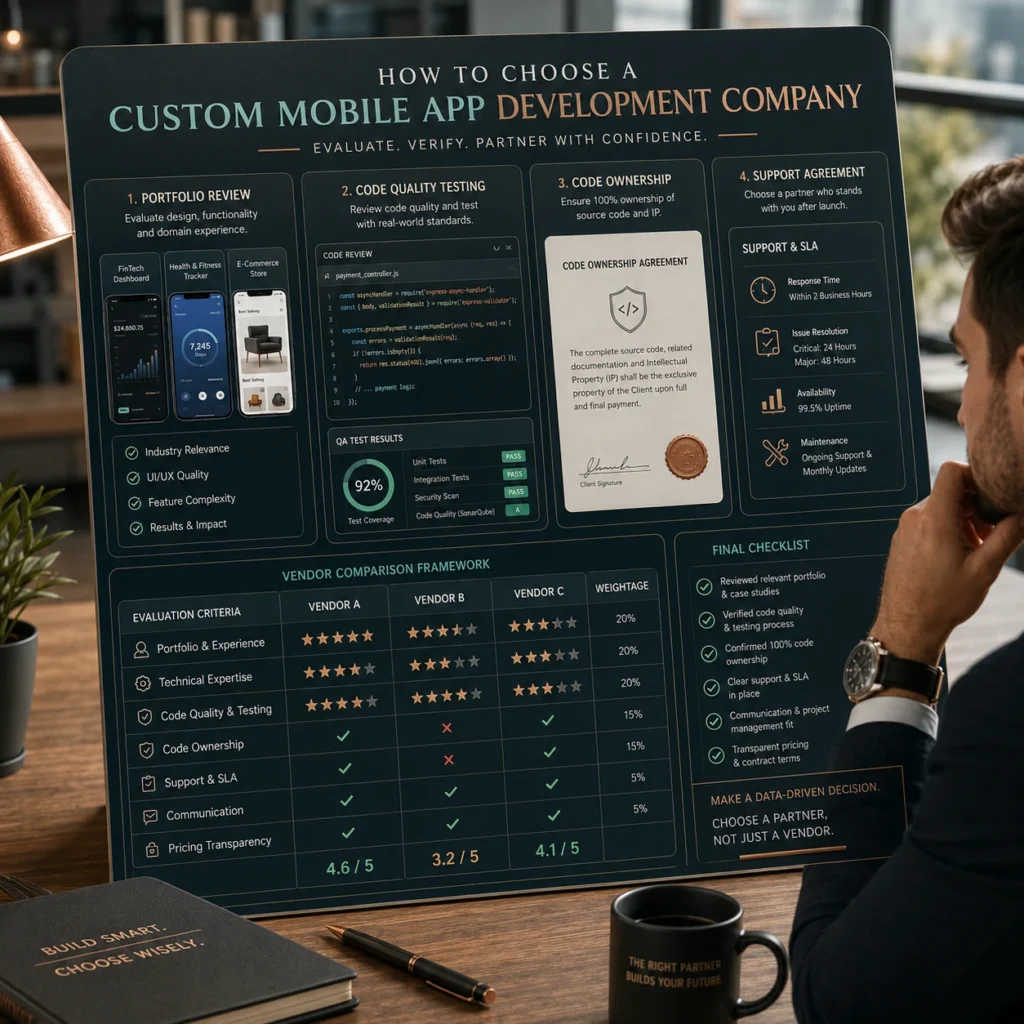
Selecting the right development partner requires looking beyond the lowest price tag to evaluate their actual past work, communication styles, and long-term support policies. Since choosing the right vendor can directly impact your product’s success, explore our detailed guide on How to Choose a Custom Mobile App Development Company for a complete evaluation framework. Many businesses rush into partnerships with agencies that make big promises but lack the actual technical depth to deliver. A bad development choice can easily result in thousands of dollars of wasted capital and months of delayed launch timelines. Taking the time to thoroughly vet potential partners protects your investment and ensures your software is built to survive in a highly competitive market.
Vetting Portfolios and Code Quality with Real-World Testing
The easiest way to assess an agency’s technical skills is to download its live apps from official app stores. Check each app’s speed, stability, usability, and overall design quality. A reliable agency should have a portfolio of active and well-rated applications. These apps should run smoothly without frequent crashes or performance issues. Ask potential partners how they organize their code repositories. You should also learn how they test apps on real physical devices before launch. A reliable partner will gladly share case studies and walk you through their development standards.
Demanding Absolute Code Ownership and Clear Support Agreements
Your development contract should clearly state that your business owns 100% of the app’s source code and intellectual property from day one. Some low-cost agencies use proprietary templates that lock clients into their systems. This can make it difficult to change hosting providers or update the code independently. The contract should also include a clear Service Level Agreement (SLA). It must explain how bugs, updates, and server maintenance will be handled after launch. Clear terms protect your digital assets and help prevent costly legal disputes later.
Why FlowmazeUX is the Definitive Choice for Your Mobile Product
At FlowmazeUX, we do not build generic, template-driven applications that get lost in the noise of the app stores. We specialize in designing and engineering high-performance, bespoke mobile solutions tailored completely to your unique business goals. Our expert team includes product designers, software architects, and agile developers. We work closely with your brand to turn complex operational challenges into simple, intuitive mobile interfaces.
We write clean, secure, and well-documented code using modern frameworks such as Flutter, React Native, Swift, and Kotlin. Our solutions are built to scale smoothly as your user base grows. We begin with deep user research and rapid prototyping. Every product also goes through rigorous quality testing. This approach helps us create digital assets that support business growth, reduce administrative costs, and improve the user experience.
So, stop wasting capital on rigid, subscription-based software templates that hold your business back. Let us construct a powerful, proprietary software asset that gives you a permanent competitive advantage.
Continue using AI Cursor?Keep it onTurn Off
Frequently Ask Questions
A basic Minimum Viable Product (MVP) typically costs between $15,000 and $40,000, depending on the number of features and backend integrations needed. This lean initial build allows your business to test your product concept with real users in the market before investing in more expensive, advanced features.
Yes, modern cross-platform frameworks like Flutter and React Native are fully capable of supporting highly secure applications that require advanced encryption, biometric logins, and compliance standards. The key is working with experienced developers who understand how to configure secure data handling and robust API connections.
Custom software gives you complete code ownership, allows you to avoid costly ongoing monthly user licensing fees, and integrates seamlessly with your existing databases. This tailored approach means your business does not have to compromise on features or alter its daily operational workflows to fit a rigid pre-made template.
A typical development timeline runs from three to nine months, which includes strategic planning, user experience design, front-end and back-end coding, and exhaustive quality checks. Rushing this process usually leads to high bug counts and rejected submissions during the app stores' strict review phases.
Operating systems like iOS and Android push major software updates every single year, which can easily break older, unmaintained application code. Regular maintenance ensures your app stays fully compatible with these system updates, fixes newly discovered security issues, and covers ongoing server hosting costs.
Outsourcing to an established development agency is usually the fastest, most cost-effective option for businesses where app development is not their core daily product. Outsourcing eliminates the heavy recruitment costs, high tech salaries, and long onboarding timelines associated with building an in-house team from scratch.
Your requirements document should clearly detail your target user personas, exact functional feature list, preferred tech stacks, database integration needs, budget ranges, and target launch dates. Providing this clear structure prevents bidding agencies from submitting wildly inaccurate pricing estimates.
Custom retail apps offer incredibly fast, checkout experiences, securely save customer details, and utilize personalized, behavior-driven push notifications to remind users of abandoned shopping carts. This direct, highly polished shopping journey consistently drives repeat purchases and leads to larger cart sizes compared to mobile websites.