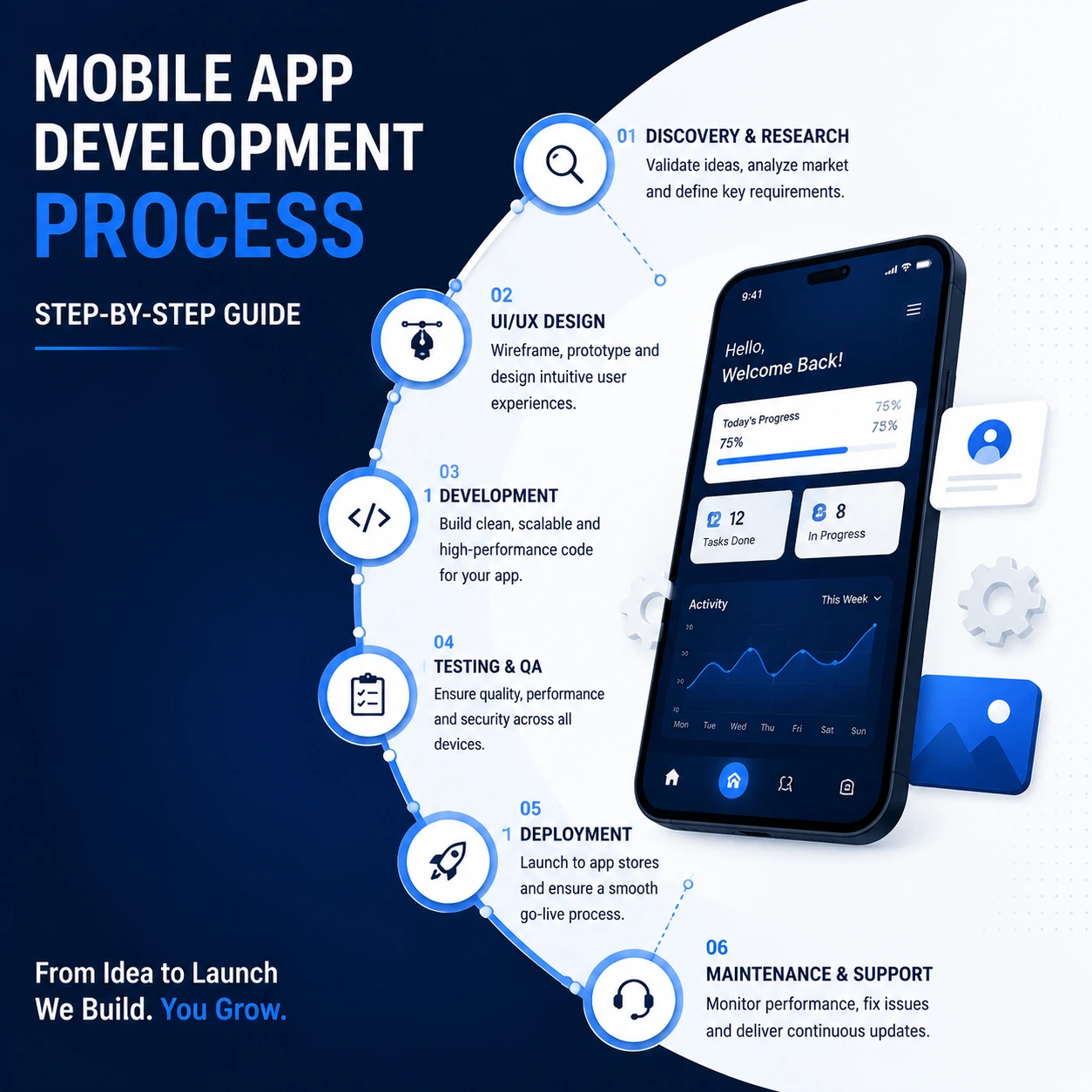
Launching a mobile application is a high-risk venture that demands precise technical execution to avoid financial ruin. Most digital products fail because creators prioritize visual aesthetics over a structured development lifecycle, leading to buggy code and immediate user abandonment.
To succeed in a saturated application store, you must run a disciplined, highly transparent engineering process. This guide details the exact production framework you need to build high-performance products that gain market traction and generate real revenue. Before starting development, firms need to comprehend the full planning, design, engineering, and deployment journey. Our custom mobile app development services guide outlines how the expert teams use a structured development method to translate ideas into scalable mobile applications.
Foundational Research and Product Discovery
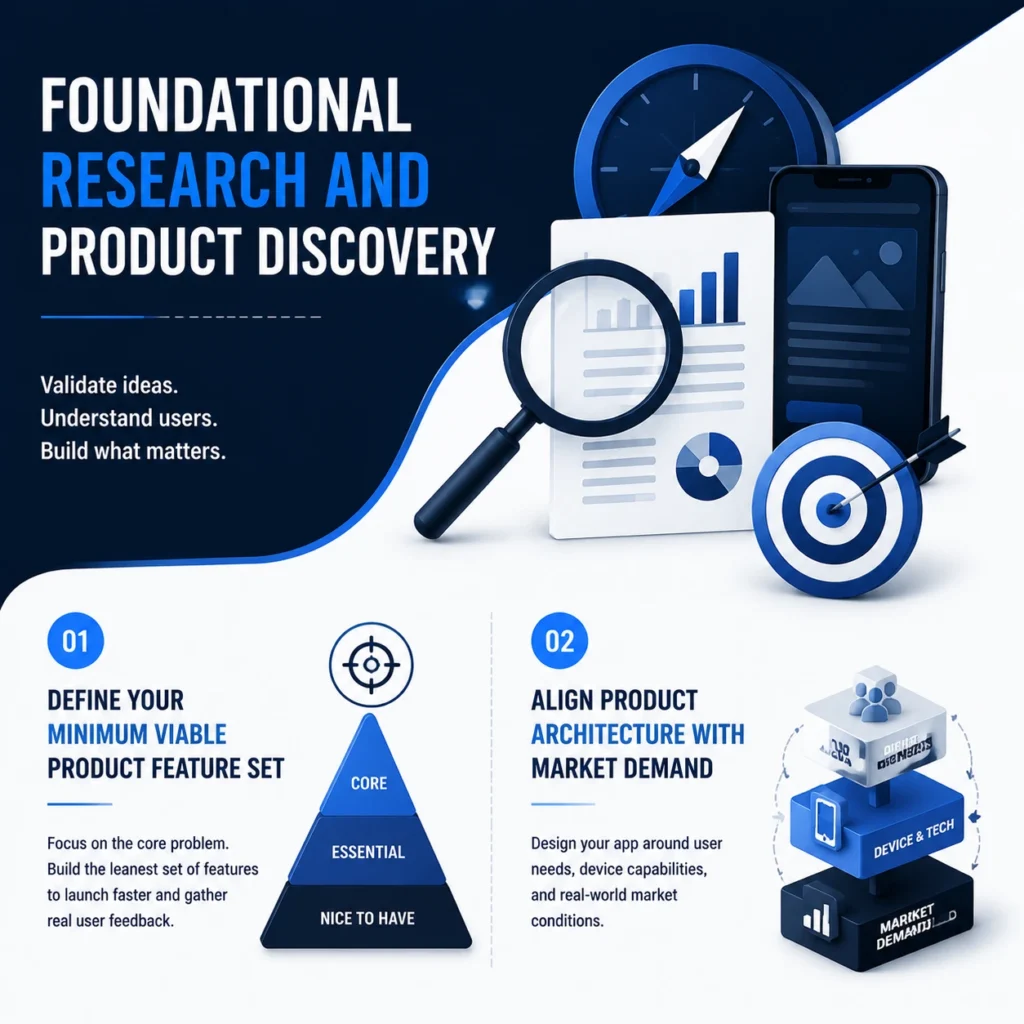
Product discovery is the phase where you validate your market hypothesis and strip away vanity features to protect your capital. Moving directly to coding without a clear, research-backed blueprint is a guaranteed way to build a product that nobody actually wants to download.
Define Your Minimum Viable Product Feature Set
A minimum viable product focuses solely on solving one core problem for your target user using the leanest set of features possible. This approach gets your software to market rapidly, allowing you to collect real user data and feedback before committing massive amounts of capital to secondary features. According to global app performance data, over ninety percent of new applications fail within their first year because they launch with overcomplicated features that confuse the user base.
Align Product Architecture with Market Demand
Market alignment means tailoring your technical performance and features directly to the physical devices and network realities of your target audience. For example, building a graphics-heavy platform for markets with low-end smartphones and slow cellular speeds will result in immediate app deletion. You must analyze the technical capabilities, user behaviors, and device standards of your specific target audience before writing your software architecture.
User Experience Mapping and System Wireframing
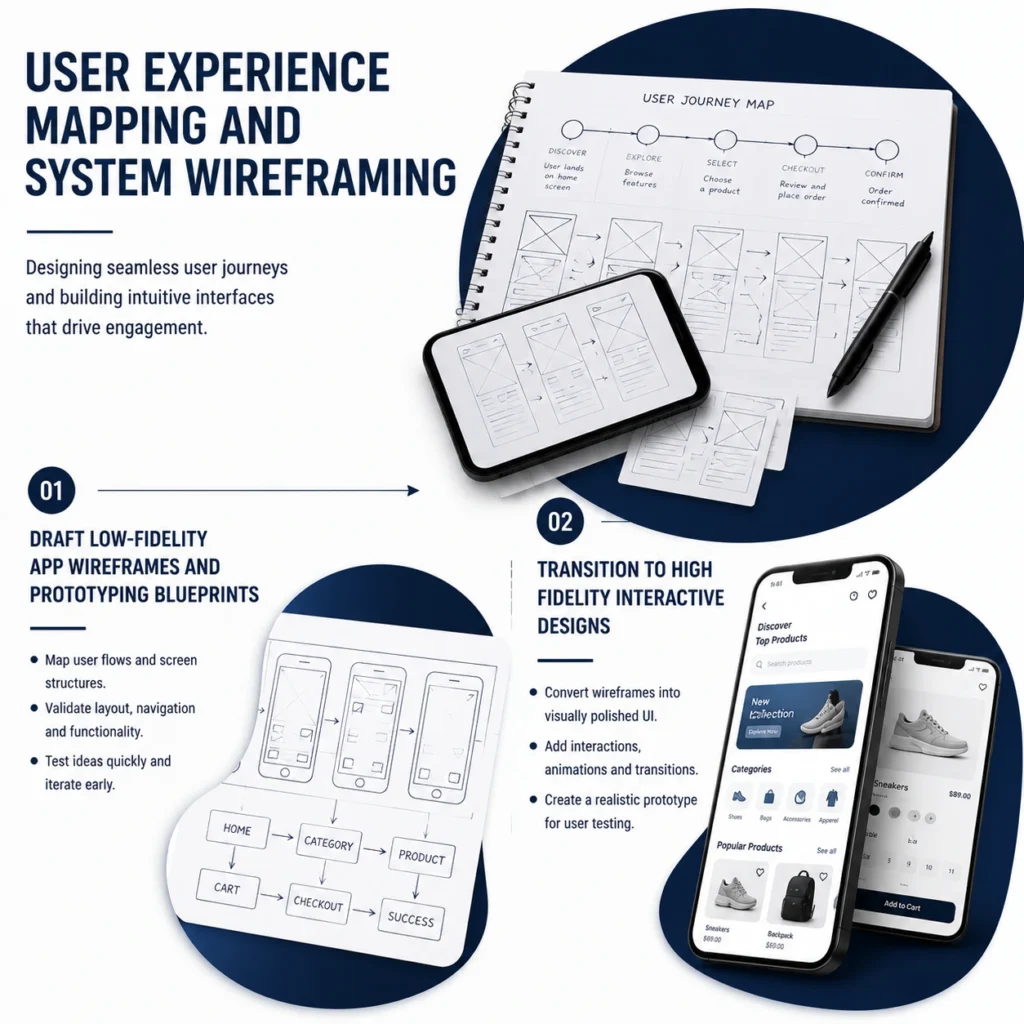
System wireframing is the visual translation of your product requirements into a logical, low-friction user path. What looks good on a designer desktop monitor often fails to function correctly on a small mobile device screen.
Draft Low-Fidelity App Wireframes and Prototyping Blueprints
A low-fidelity app wireframe and prototyping model map out the absolute basic navigation paths and layout structures without any visual design styling. This rapid sketching process allows you to identify navigation bottlenecks, layout errors, and user friction points before you spend money on custom graphics. Skipping this stage and jumping straight to high-fidelity designs makes changes ten times more expensive down the line.
Transition to High Fidelity Interactive Designs
High-fidelity interactive designs convert your flat wireframes into clickable, realistic screen prototypes that look and feel like a finished product. This interactive prototype serves as the ultimate visual guide for your software developers, demonstrating exactly how buttons, screen transitions, and animations must behave. A well-constructed prototype eliminates guesswork during the coding phase, preventing misaligned expectations between designers and engineers.
Choosing the Right Tech Stack for Scalability
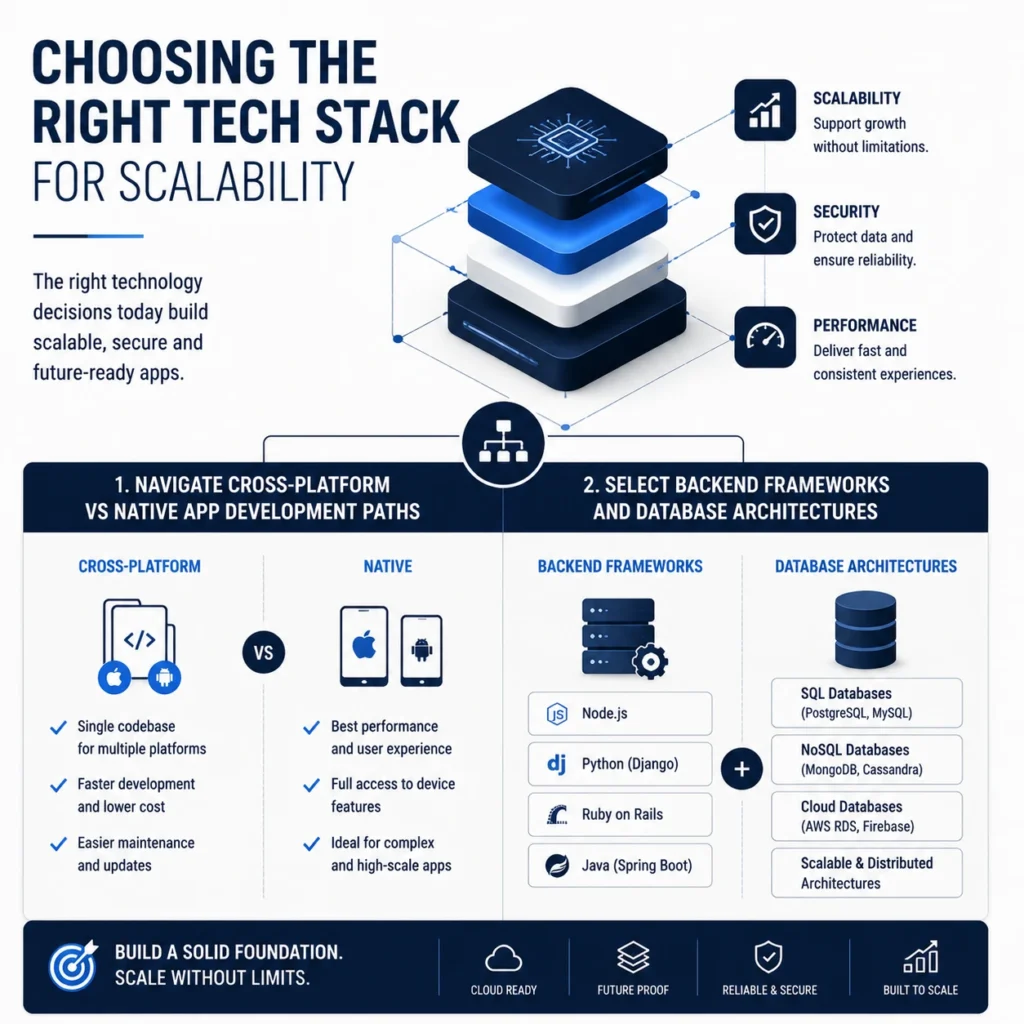
Your tech stack is the underlying codebase and infrastructure choices that dictate your app’s performance, development speed, and lifetime maintenance costs. Making a lazy decision here can lock you into slow code libraries and double your future engineering payroll. One of the most critical considerations for any mobile product journey is selecting the correct technology stack. Before development commences, the entire custom mobile app development process encompasses technology selection, architecture planning, platform decisions, and scalability considerations.
Navigate Cross-Platform vs Native App Development Paths
Selecting cross-platform vs. native app development requires balancing your upfront engineering budget against your long-term product performance needs. Native development uses platform-specific code to maximize device speed and access advanced hardware features. However, it requires separate teams for iOS and Android platforms. Cross-platform frameworks like Flutter use a single shared codebase for both platforms. This approach can reduce your initial development budget by up to forty percent.
Select Backend Frameworks and Database Architectures
Your backend must handle real-time data sync, user authentication, and API requests without dropping connections or slowing down. You need a scalable cloud database architecture that can easily handle sudden traffic spikes without crashing. Modern cloud setups allow your backend systems to scale automatically, so your hosting costs remain low until your user numbers grow.
Executing Agile App Development Phases
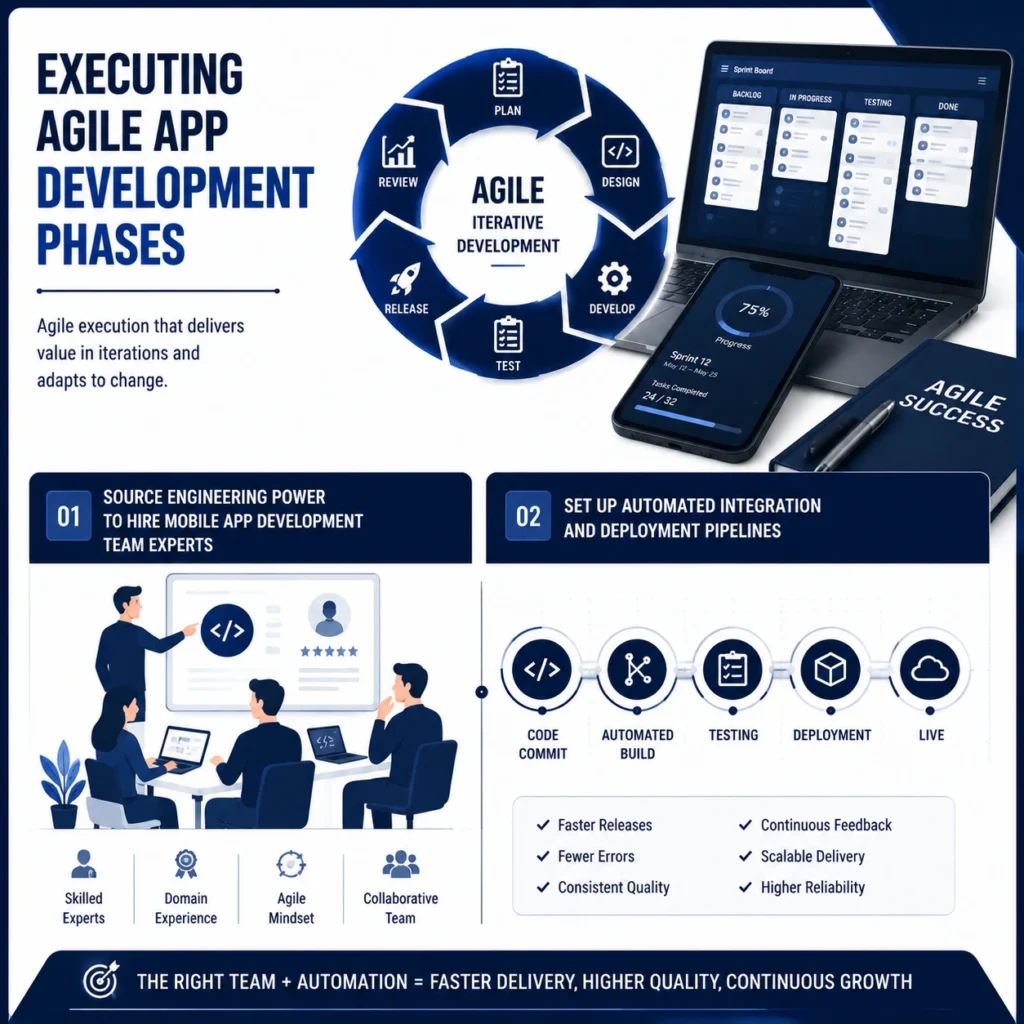
Agile engineering means breaking your code production down into short, highly manageable two-week sprints to maintain steady momentum. This framework keeps your development team focused on delivering functional, testable code increments regularly.
Source Engineering Power to Hire Mobile App Development Team Experts
Finding the right developers requires you to hire mobile app development team professionals who have a proven history of shipping high-performance code. Do not rely on cheap, unvetted freelancer marketplaces where communication is poor and code repositories are messy. Partner with established agencies that provide dedicated project managers, senior QA testers, and full repository visibility.
Set Up Automated Integration and Deployment Pipelines
Automated integration pipelines automatically run tests and prepare new app builds every single time a developer commits code to the repository. This continuous pipeline catches code conflicts and bugs immediately, preventing your software from breaking as new features are added. Running these automated tasks saves your QA team dozens of hours and keeps your main code branch production-ready at all times.
Strict App Performance Testing Tools and Deployment Procedures
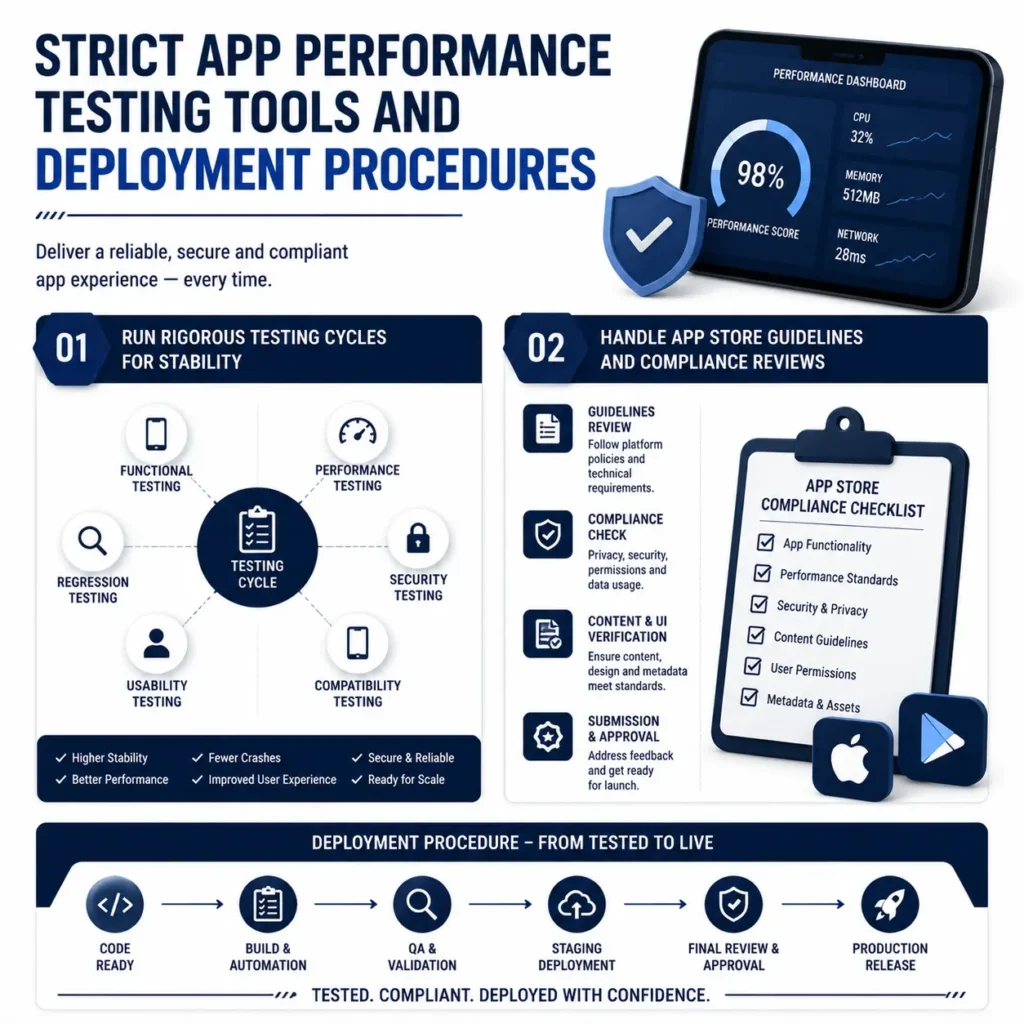
Quality assurance is the final firewall that protects your brand from launching a broken, crash-prone product into the market.
Run Rigorous Testing Cycles for Stability
Testing requires your QA engineers to run deep security scans, load tests, and user acceptance sweeps on multiple real devices. You must test your app under various simulated network speeds and low-battery states to verify performance stability. Statistical reports show that roughly forty-five percent of software projects exceed their initial budgets, and fifty-five percent miss their launch dates due to poor testing protocols.
Handle App Store Guidelines and Compliance Reviews
Passing App Store reviews requires your app to strictly comply with Apple and Google data privacy, user consent, and visual guidelines. Apple rejected nearly thirty-six percent of initial app submissions due to security flaws, broken links, or incomplete metadata. You must follow-up that your development team designs your system to respect global privacy laws, secure payments, and handle sensitive user files correctly.
Post-Launch App Maintenance and Support Frameworks
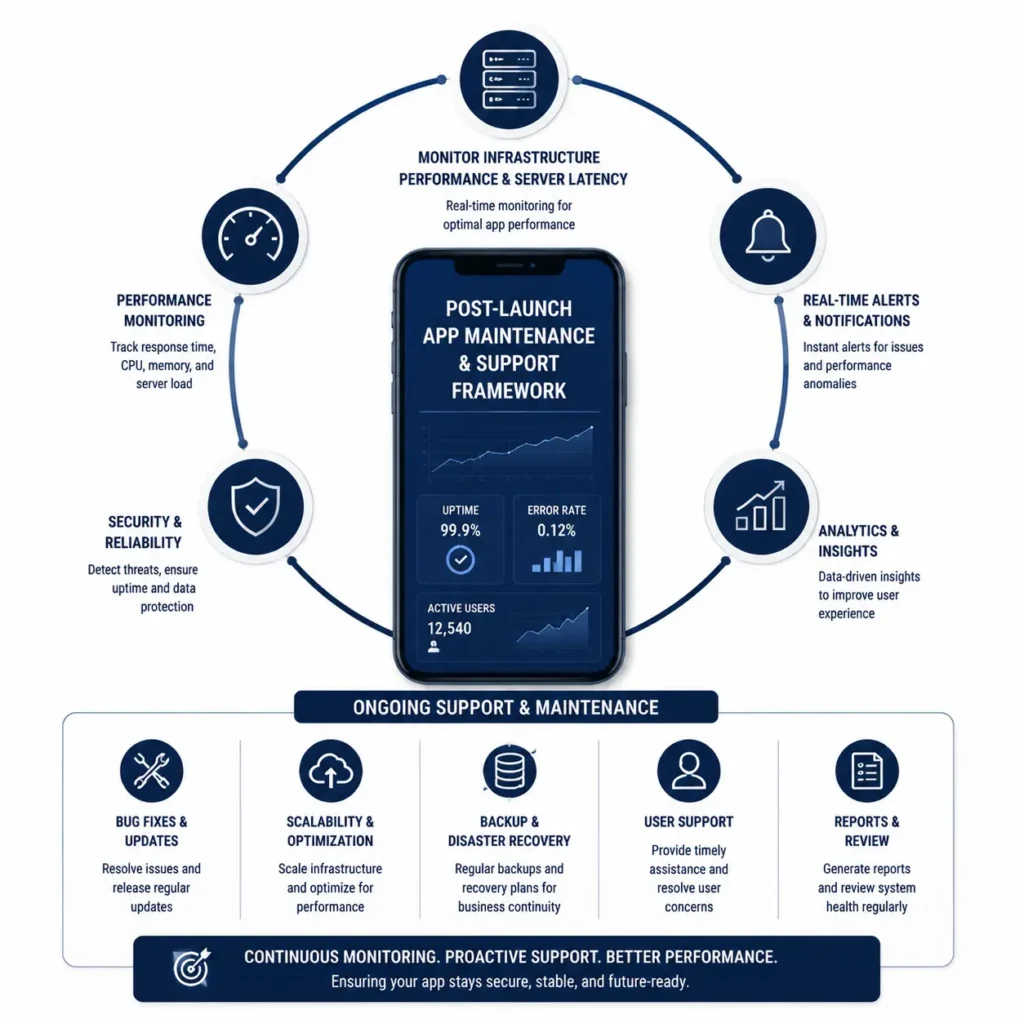
Launch day is not the end of your software project; it is the moment your product enters a continuous cycle of updates and optimization. Successful applications require ongoing improvements after launch, including monitoring their performance, updating security, and adding features. Learn more about our mobile app development services approach and find out how organizations sustain and scale digital products after launch.
Monitor Infrastructure Performance and Server Latency
Monitoring requires using real-time analytics to track system errors, slow API endpoints, and server load spikes immediately. You must watch these server metrics closely to detect slow speeds before your active users begin complaining. Fast, low-latency databases keep your app highly responsive and protect your user retention rates from dropping. One of the most critical considerations for any mobile product journey is selecting the correct technology stack.
Manage Ongoing App Store Maintenance and Feature Upgrades
Regular app store maintenance requires continuous software adjustments to support annual operating system updates and security patches. If you fail to release compatible updates when iOS and Android introduce yearly changes, your app may stop working properly. This can lead to user frustration and higher churn rates. Businesses should budget fifteen to twenty-five percent of the original development cost for annual maintenance. This support helps keep the app secure, updated, and competitive.
FlowmazeUX’s Open Invite!
If you want to build a cheap, template-based app that crashes on launch and drives zero revenue, we are not the agency for you. At FlowmazeUX, we build high-performance mobile products that scale. We strip away the fluff, construct clean, proprietary codebases using Flutter, Swift, and Kotlin, and run a disciplined agile process that gets you to market on time and on budget. No excuses, no delays, just raw technical execution that gives you complete ownership of your product’s success. Let’s construct a genuine digital asset.
Frequently Ask Questions
The discovery phase is critical because it forces you to validate your assumptions and freeze your product scope before spending money on coding. Skipping this phase leads to continuous changes during development, which can add up to fifty percent to your initial timeline and budget.
You must focus exclusively on the navigation paths and user interaction hierarchy, completely ignoring colors, branding, and images. This raw structure allows your team to test and refine the layout, ensuring users can navigate the app without confusion or friction.
Cross-platform frameworks allow you to write one codebase that deploys to both iOS and Android, cutting your upfront engineering expenses by up to forty percent. These savings allow you to launch faster, validate your market, and protect your capital before investing in native codebases.
You must select backend systems that support auto-scaling databases and microservices, ensuring your app handles traffic spikes without server lag. Your database choice must align directly with how your app processes, stores, and syncs real-time user data.
You must demand bi-weekly sprint demos where you can test functional builds and secure full real-time access to the GitHub code repository. This transparency confirms that you can monitor daily code commits, verify progress, and catch potential development delays early.
Automated performance tools run continuous checks for memory leaks, slow screen transitions, and security vulnerabilities every time new code is written. This automated testing catches bugs immediately, saving your team from shipping a broken product that gets deleted by users.
Your app must strictly adhere to Apple and Google requirements regarding user data encryption, explicit privacy policies, and clean UI standards. You must also ensure your checkout system uses approved payment gateways to pass the strict review processes.
Ongoing maintenance covers security updates, server optimization, database cleanups, and mandatory compatibility upgrades for new operating systems. Without this support, simple updates from Apple and Google will break your code, causing your app to crash and lose users.